$25.3B Evaporates Every Year: ~5.3% of the English-Speaking Software Market Lost to Churn
Churn is not just a metric; it is a silent tax on every dollar of growth you fight for. Using GDP-based country allocation, Gartner's global software totals, and SaaS/support churn benchmarks, we estimated annual "gross revenue churn" across major English-primary business markets.
The result is sobering: a defined ~$480B yearly software market (SaaS, on-prem, and software-related subscriptions) sheds about ~$25.3B in revenue each year, roughly ~5.3%, simply because customers don't renew, downgrade, or walk away.
The Compounding Cost of Churn
In plain terms, churn is the biggest "expense" most software teams never budget. That loss has a compounding cost: if you run a $20M ARR business, 5.3% churn means replacing about $1.06M annually just to stay flat, before you spend a dollar on real growth.
Replacement isn't free: you pay acquisition spend, sales commissions, onboarding time, and usually deeper discounts, exactly when cash runway matters and quarterly targets get tougher. This is why customer success is a revenue function, not a support function: retention is cheaper to "buy" than new revenue.
Reframing Pricing and Contracting
It also reframes pricing and contracting. Annual prepay, multi-year terms with true adoption checkpoints, and packaging that matches value delivered can reduce churn without discounting your roadmap.
One concrete action: start measuring Gross Revenue Retention (GRR) weekly by cohort and plan type, then run a 30-day "time-to-value" sprint on your top churn driver (onboarding friction, weak activation, missing integrations, or unclear ROI reporting).
The $25.3B Opportunity
Every point of churn you remove drops straight to durable revenue. Imagine if you could hear how your customers really talk about your product.
Treat churn like a board-level P&L line item, and take back the $25.3B opportunity hiding in plain sight.
See how voice interviews catch churn signals early: real churn case study or try the Live Test Drive.
About the author

Stu Sjouwerman
CEO and Co-Founder, ReadingMinds.AI
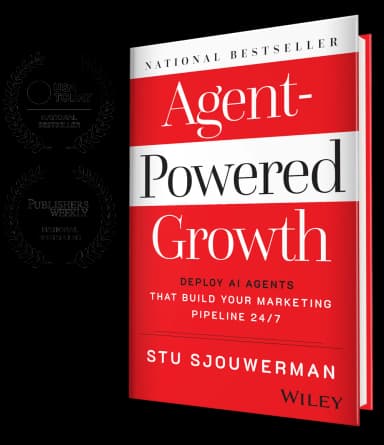
Stu founded KnowBe4 in 2010 and grew it into the world's largest security-awareness training platform before taking it public on the NASDAQ in 2021 and its subsequent acquisition by Vista Equity Partners in 2023. He co-founded ReadingMinds with Marcio Castilho and Alin Irimie, the same leadership team that built KnowBe4. Author of the USA Today bestseller Agent-Powered Growth and a regular contributor to Forbes Tech Council and Greenbook on AI, agentic marketing, and customer intelligence.
Know what your customers feel. Not just what they say.
ReadingMinds conducts AI voice interviews that classify emotion type and intensity. Try a 3-minute Live Test Drive with Emma.
Start 3‑Minute Live Test Drive