The Next Layer of AI: Why Agent Infrastructure Needs Customer Emotion
AI agents are rapidly becoming the new operators of software. Instead of humans logging into dashboards and analyzing reports, autonomous systems increasingly evaluate data, make decisions, and trigger actions across marketing, sales, and product workflows. This shift is creating a new requirement for enterprise software: machine-readable intelligence.
Today, most AI research tools still produce outputs designed for humans: transcripts, summaries, and reports. Those are valuable, but they are not how agents work. Agents don't read PDFs or dashboards. They call APIs and endpoints to retrieve structured signals they can act on immediately.
A New Category Emerges
Instead of simply automating interviews or surveys, platforms must transform conversations into decision signals. Signals like buyer confidence, hesitation, conviction, or emotional disengagement are far more actionable than a generic "customer feedback report." When structured correctly, these signals become the inputs that AI agents use to guide actions across systems.
What This Looks Like in Practice
Imagine an AI sales assistant evaluating a deal. Instead of searching transcripts, it queries a signal endpoint:
GET /buyer-confidence
If confidence is falling and hesitation is rising, the agent alerts the account team before the deal stalls.
Or imagine a marketing agent preparing a campaign. Instead of reading research summaries, it queries:
GET /message-resonance
The response identifies which narratives generate conviction versus skepticism across segments.
Customer Insight Becomes Infrastructure
In this model, customer insight is no longer a report someone reads. It is infrastructure that agents consume.
ReadingMinds is building exactly that layer: an expression signal engine that transforms voice conversations into structured intelligence agents can use. Our system tags six core expression labels (sad, angry, confrontational, neutral, cheerful, enthusiastic) each scored on a 1 to 9 intensity scale, and composes them into a measurable ReadingMinds Expression Fingerprint.
Every signal is traceable to a specific customer quote, timestamp, and intensity score. This is not sentiment analysis. It is cited, structured evidence that agents can reason about and act on programmatically.
Why This Matters Now
As AI agents become the new users of enterprise software, the platforms that supply their most valuable signals will define the next generation of infrastructure. Conversations contain the richest human signal available. The future belongs to systems that can translate those signals into decisions.
The question is no longer "how do we analyze customer feedback?" It is "how do we make customer emotion a first-class input for every agent in the stack?"
See how ReadingMinds powers agent workflows: explore the platform or try the 3-Minute Live Test Drive.
About the author

Stu Sjouwerman
CEO and Co-Founder, ReadingMinds.AI
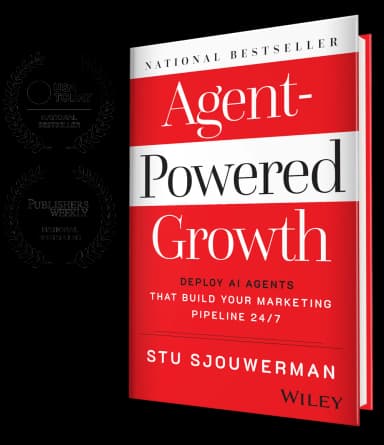
Stu founded KnowBe4 in 2010 and grew it into the world's largest security-awareness training platform before taking it public on the NASDAQ in 2021 and its subsequent acquisition by Vista Equity Partners in 2023. He co-founded ReadingMinds with Marcio Castilho and Alin Irimie, the same leadership team that built KnowBe4. Author of the USA Today bestseller Agent-Powered Growth and a regular contributor to Forbes Tech Council and Greenbook on AI, agentic marketing, and customer intelligence.
Know what your customers feel. Not just what they say.
ReadingMinds conducts AI voice interviews that classify emotion type and intensity. Try a 3-minute Live Test Drive with Emma.
Start 3‑Minute Live Test Drive