5 AI Adoption Myths That Get in the Way of Results, and the Customer Evidence Each One Ignores
In my latest Forbes Technology Council piece, I wrote about five myths that get in the way of effective AI adoption. The more conversations I have with executives, the clearer it gets: none of these myths are about technology. They are about evidence.
Adoption is still early. McKinsey research cited in the column found that only 40% of respondents from large organizations report scaling AI agents, up from 27% a year earlier. More than half of large enterprises are not there yet.
The companies that are scaling keep running into the same five beliefs. Each one skips the same question: what does your AI actually know about your customers, and how does it know it?
Myth 1: Better Models Mean You Need Less Customer Research
It is tempting to think a smarter model needs less input from customers. The opposite is true. A model is only as good as the customer information it reasons over, and a better model spreads a bad input across more decisions, faster.
Picture a pricing agent working from last year's win and loss notes. If three of your five biggest objections have changed since then, a better model does not fix that. It repeats last year's conclusions with more confidence, in more campaigns.
What to do instead: put the customer inputs behind every agent that acts on customer signal on a schedule. Re-check them with real customers at least quarterly, starting with the inputs that drive pricing, positioning, and retention.
Myth 2: Memory Is the Same as Understanding
Your AI may recall everything a customer said in their last six interactions. That is a record, not understanding. It does not tell you their priorities, their risks, or what they plan to do next.
Repetition makes this worse. When one CRM note that says "price concern" gets copied into a dozen AI summaries, it starts to look like a pattern. It is one comment, repeated.
Evidence is what turns a record into something you can act on. For any customer claim your AI relies on, you should be able to see:
- Source: which customers said it, and when.
- Exact words: the quote, not a paraphrase of a paraphrase.
- Prevalence: how many customers raised it, out of how many asked.
- Contrary voices: who said the opposite.
- Delivery: how it was said, such as hesitation, enthusiasm, or a flat, low-energy answer that undercuts the words.
Myth 3: The Winning AI Strategy Is Picking the Best Model
Model leadership is temporary. In ShellBench, a benchmark of everyday agent tasks published this week, just 1.1 percentage points separated the top three models. Next quarter the order will change again.
Models are engines. They matter, but you cannot win a race with the best engine if you do not know where you are going. What wins is everything around the model: the systems, the methods, and the layer of evidence that tells your agents what is true about your customers right now.
Choosing a model because it topped a leaderboard is like believing your CRM is what keeps customers. The tool helps. The evidence you put into it decides the outcome.
See it for yourself. Take a 3-minute Live Test Drive with Emma, our AI interviewer, and get a report where every finding links to the exact quote behind it.
Myth 4: If Your AI Can Do Something, It Should
Capability is not permission. "Autonomous agent" is a misleading phrase, because it suggests an agent should act on its own simply because it can.
The fix is to separate three kinds of authority, in writing:
- Evidence authority: what the AI may conclude. For example, "9 of 40 churned customers named onboarding as the reason they left."
- Recommendation authority: what it may suggest. For example, "Test a guided onboarding call-out in the first week."
- Action authority: what it may do without a person signing off. Keep this narrow for anything that touches pricing, customer messaging, or spend.
Evidence authority and action authority are not the same thing. Blurring them is where AI deployments go sideways. We hold ourselves to the same rule: our own marketing agents draft and prepare work, and a person approves anything that goes out under our name.
Myth 5: AI Can Replace Customer Conversations
This is the myth that concerns me most. Every quarter I hear more confidence that AI can pull enough signal from existing data to make talking to customers unnecessary.
AI is excellent at finding patterns in what customers have already said or done. It cannot surface a concern a customer has not raised yet, hear hesitation they have not acted on, or learn about a competitive evaluation they have not mentioned.
Exit surveys show the gap clearly. The form says "too expensive." Two follow-up questions later, the customer explains that the integration never worked and the team stopped logging in by month two. That answer did not exist in any dataset until someone asked. Our churn interviews page walks through the questions that get there.
Where AI does change the game is scale. It lets you have many more conversations than a research team ever could. That is exactly why we built Emma: to ask the follow-up every time, with every customer, and keep the evidence.
The Standard Worth Holding Your AI To
The executives I respect most are asking hard questions about what their AI systems know, how they know it, and what happens when they are wrong. That is not skepticism. It is the right standard for any system you are about to trust with your customers.
Before you act on an AI recommendation about customers, ask:
- What customer evidence is this based on?
- When was that evidence collected?
- Can I see the exact quotes?
- How many customers said it, and who disagreed?
- Who approves the action?
If the system cannot answer the first four, the fifth answer should be a person.
Read the Full Column
Read the full piece on Forbes. For more on why traceable evidence matters, see We Sell Evidence, Not Interviews and Five AI Claims to Check Before You Bet Next Quarter's Budget, or browse our whitepapers.
Then hear it for yourself: a 3-minute Live Test Drive with Emma.
Better models. Same standard. Show me the evidence.
About the author

Stu Sjouwerman
CEO and Co-Founder, ReadingMinds.AI
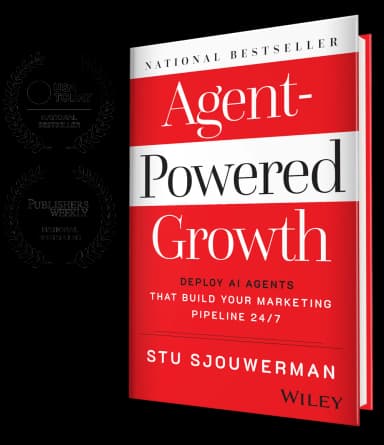
Stu founded KnowBe4 in 2010 and grew it into the world's largest security-awareness training platform before taking it public on the NASDAQ in 2021 and its subsequent acquisition by Vista Equity Partners in 2023. He co-founded ReadingMinds with Marcio Castilho and Alin Irimie, the same leadership team that built KnowBe4. Author of the USA Today bestseller Agent-Powered Growth and a regular contributor to Forbes Tech Council and Greenbook on AI, agentic marketing, and customer intelligence.
Know what your customers feel. Not just what they say.
ReadingMinds conducts AI voice interviews that classify emotion type and intensity. Try a 3-minute Live Test Drive with Emma.
Start 3‑Minute Live Test Drive