75% of Marketing Teams Use AI, But Campaigns Still Feel Generic: Here's the Gap
Artificial intelligence is rapidly becoming a standard part of the marketing technology stack. According to recent industry research, roughly three-quarters of marketing teams have already integrated AI into their operations. The pressure is coming from everywhere: executive leadership, competitors, and the expectation that AI will unlock faster insights and more personalized customer engagement.
But adoption does not equal transformation.
A large share of marketers report that despite deploying AI tools, their campaigns still feel generic, slow, and disconnected from real customer behavior. The core problem is not access to technology; it is the underlying data and workflow structure. Customer information remains fragmented across platforms like CRM systems, marketing automation tools, analytics dashboards, and support software. When data lives in silos, AI cannot see the full picture.
The result is predictable: automated campaigns that scale volume but fail to understand customers in context.
The Operational Gap
Another gap is operational. Many teams are experimenting with AI for copy generation, ad optimization, or reporting. Yet only a small minority have embedded AI deeply into everyday workflows, such as continuous customer insight collection, real-time sentiment detection, or automated decision loops that adapt campaigns dynamically.
This is the difference between AI as a feature and AI as an operating system.
When AI is bolted onto existing processes, it accelerates what you already do. When AI is embedded into the workflow itself, it changes what you are capable of doing. The first approach gives you faster reports. The second gives you signals you never had access to before.
Why Data Silos Kill AI Effectiveness
Consider how most marketing teams collect customer feedback today. Surveys go out quarterly. NPS scores get logged in one platform. Support tickets live in another. Sales call notes sit in the CRM. Social listening data feeds a separate dashboard.
Each of these sources captures a fragment of the customer's experience. None of them capture how the customer actually expresses while making a decision.
AI trained on fragmented data produces fragmented insights. It can tell you what happened, but it cannot tell you why. It can extrapolate behavior from historical patterns, but it cannot capture the expression signals that precede behavioral change.
The Next Wave: From Tool Adoption to Workflow Transformation
The marketing industry is entering a new phase. The first wave was tool adoption: getting AI into the stack. The next wave is workflow transformation, where AI becomes a system that continuously listens to customers, interprets signals, and guides action.
This means moving beyond periodic research cycles and into always-on customer intelligence. It means capturing not just what customers say, but how they say it: the hesitation before a pricing objection, the enthusiasm when describing a competitor, the resignation in a long-tenured customer's voice.
What Separates the Winners
The winners will not be the teams with the most AI tools.
They will be the ones that turn customer signals into decisions faster than everyone else.
That requires three things:
- Unified customer signal collection that captures voice, text, and behavioral data in one place
- Real-time emotional intelligence that detects shifts in customer sentiment as they happen, not weeks later
- Decision-ready output that gives marketers, product teams, and revenue leaders evidence they can act on immediately
The gap between AI adoption and AI transformation is not a technology problem. It is a workflow problem. And the teams that close it first will have a structural advantage that compounds over time.
See how marketing teams use ReadingMinds: use cases or try the Live Test Drive.
About the author

Stu Sjouwerman
CEO and Co-Founder, ReadingMinds.AI
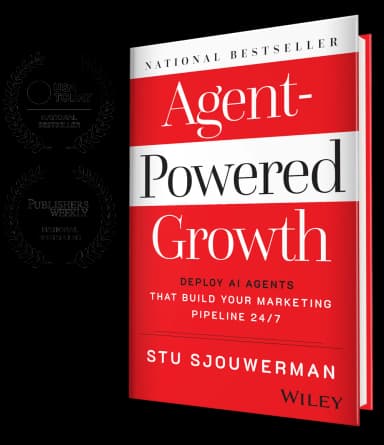
Stu founded KnowBe4 in 2010 and grew it into the world's largest security-awareness training platform before taking it public on the NASDAQ in 2021 and its subsequent acquisition by Vista Equity Partners in 2023. He co-founded ReadingMinds with Marcio Castilho and Alin Irimie, the same leadership team that built KnowBe4. Author of the USA Today bestseller Agent-Powered Growth and a regular contributor to Forbes Tech Council and Greenbook on AI, agentic marketing, and customer intelligence.
Know what your customers feel. Not just what they say.
ReadingMinds conducts AI voice interviews that classify emotion type and intensity. Try a 3-minute Live Test Drive with Emma.
Start 3‑Minute Live Test Drive