Why AI Agents Need Human-Aware Judgment, Not Just Governance
The conversation around AI agents is shifting quickly. Over the past year, most attention has focused on what agents can do: how they automate workflows, execute tasks, and accelerate decision-making. More recently, the focus has moved to governance: guardrails, policies, and evaluation systems designed to keep those agents in check.
But there is a problem.
Most of today’s governance models are built on static rules and post-action evaluation. They can prevent obvious mistakes. They can flag issues after the fact. What they cannot do is answer the most important question in real time:
Should this action happen at all?
This is the gap.
The Limits of Static Control
Current systems treat governance as a rules engine. If certain conditions are met, an action is allowed. If others are violated, it is blocked. This works for clear boundaries: compliance, permissions, or predefined constraints.
But real human interactions are not static.
A buyer might say "that makes sense," but hesitate in tone. A customer might respond positively while quietly losing confidence. A follow-up sent at the wrong moment can do more harm than no follow-up at all.
These are not rule violations. They are failures of timing and judgment.
And no static policy can capture them.
The Opportunity: Dynamic, Human-Aware Control
There is still no dominant layer that understands human state in real time and uses it to shape agent behavior.
Imagine a different system:
- Instead of "follow up in 2 days," it evaluates whether the customer is emotionally ready
- Instead of "send proposal," it detects hesitation and delays the action
- Instead of reacting after a failed interaction, it prevents the misstep entirely
This is not governance in the traditional sense. It is dynamic decision control based on human signals.
A New Layer in the Stack
As AI systems mature, the stack is becoming clearer:
- Agents execute
- Workflows organize
- Evaluations measure
- Policies constrain
What’s missing is the layer that interprets the human on the other end.
That is where ReadingMinds operates. We transform conversations into real-time emotional signals: confidence shifts, hesitation patterns, trust changes. We use those signals to guide when and how agents act.
Because in human interactions, success is rarely about what you do. It’s about whether you do it at the right moment. And that is something rules alone can never decide.
About the author
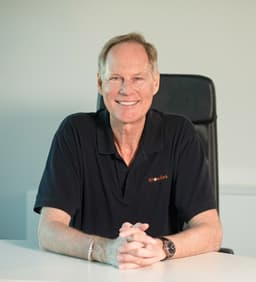
Stu Sjouwerman
CEO and Co-Founder, ReadingMinds.AI
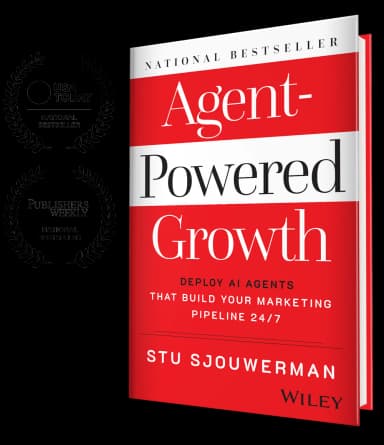
Stu founded KnowBe4 in 2010 and grew it into the world's largest security-awareness training platform before taking it public on the NASDAQ in 2021 and its subsequent acquisition by Vista Equity Partners in 2023. He co-founded ReadingMinds with Marcio Castilho and Alin Irimie, the same leadership team that built KnowBe4. Author of the USA Today bestseller Agent-Powered Growth and a regular contributor to Forbes Tech Council and Greenbook on AI, agentic marketing, and customer intelligence.
Know what your customers feel. Not just what they say.
ReadingMinds conducts AI voice interviews that classify emotion type and intensity. Try a 3-minute Live Test Drive with Emma.
Start 3‑Minute Live Test Drive