The AI Maturity Gap: Where Your Insights Stack Really Stands (And Why It Matters)
Every company says it's "using AI." But the real question is: how far along are they actually?
The latest industry benchmarks show a striking maturity gap between companies experimenting with AI and those generating real business impact. Here is the most useful strategic framework emerging from that data.
The Four Stages of AI Insights Maturity
Stage 1: Experimental (~40-45% of organizations)
Teams testing AI tools, running pilots in isolated workflows. This is the curiosity stage. AI is present, but it is not yet changing how decisions get made.
Stage 2: Operational (~30-35% of organizations)
AI is embedded in a few research workflows: analysis, summarization, report generation. Productivity gains are real, but the scope is narrow. The organization is faster at doing what it already did.
Stage 3: Integrated (~15-20% of organizations)
AI systems are connected across marketing, CX, and product data. This is where strategic advantage begins. Insights flow between teams instead of sitting in silos. Decisions are informed by a unified view of the customer.
Stage 4: Autonomous (~3-5% of organizations)
AI agents run insight loops continuously: interviewing customers, extracting expression signals, surfacing risks and opportunities in near real time. These are the category leaders.
The Perception Gap
Most companies believe they are in Stage 3. The data says they are usually still in Stage 1 or 2.
Why? Because real AI maturity requires three things most organizations have not solved yet:
- Signal capture: collecting richer human inputs (voice, behavior, emotion) instead of static surveys
- Insight synthesis: turning raw signals into structured knowledge automatically
- Continuous feedback loops: insights flowing directly into marketing, product, and retention decisions
Without these three layers, AI simply becomes a faster reporting tool, not a decision engine.
Why This Gap Is Widening
The gap between Stage 2 and Stage 3 is not a technology problem. It is a data problem.
Most organizations still rely on the same inputs they used a decade ago: quarterly surveys, NPS scores, support tickets, CRM notes. Each captures a fragment of the customer's experience. None of them capture how the customer actually expresses while making a decision.
AI trained on fragmented data produces fragmented insights. It can tell you what happened, but it cannot tell you why. It can extrapolate behavior from historical patterns, but it cannot capture the expression signals that precede behavioral change.
The Shift to Agent-Driven Research
This is exactly why the next wave of innovation in customer insights is shifting toward agent-driven research systems. Instead of periodic research cycles, these systems continuously interview customers, extract expression signals, and surface risks or opportunities in near real time.
The companies that move beyond experimentation will gain something extremely valuable: a living map of what their customers actually express.
And in competitive markets, the company that understands its customers' emotions fastest usually wins.
Where Do You Stand?
Run a Live Test Drive and experience how AI-driven voice interviews reveal the signals surveys miss. Three minutes. One conversation. A cited report in your inbox.
See how marketing teams use ReadingMinds: use cases or try the Live Test Drive.
About the author

Stu Sjouwerman
CEO and Co-Founder, ReadingMinds.AI
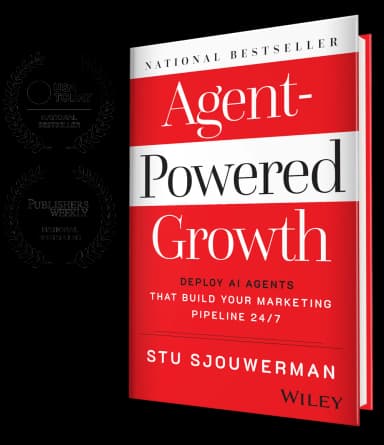
Stu founded KnowBe4 in 2010 and grew it into the world's largest security-awareness training platform before taking it public on the NASDAQ in 2021 and its subsequent acquisition by Vista Equity Partners in 2023. He co-founded ReadingMinds with Marcio Castilho and Alin Irimie, the same leadership team that built KnowBe4. Author of the USA Today bestseller Agent-Powered Growth and a regular contributor to Forbes Tech Council and Greenbook on AI, agentic marketing, and customer intelligence.
Know what your customers feel. Not just what they say.
ReadingMinds conducts AI voice interviews that classify emotion type and intensity. Try a 3-minute Live Test Drive with Emma.
Start 3‑Minute Live Test Drive