How to Spot Churn Risk Before It Happens: A Guide to Emotional Intelligence in Retention
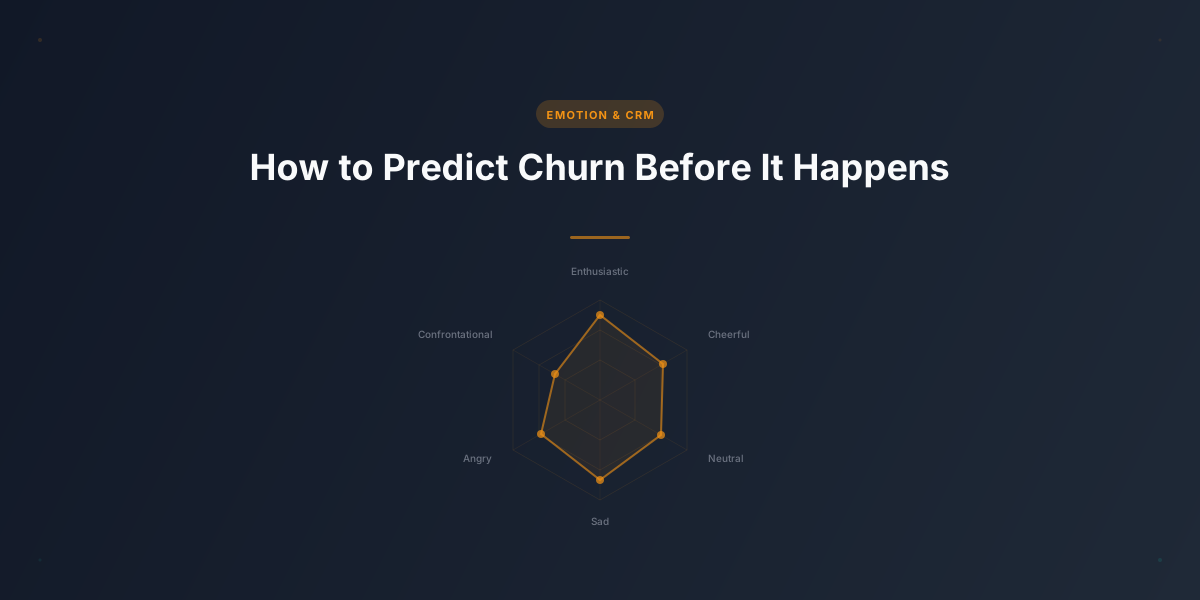
Most churn dashboards are obituaries. They tell you who already left. Emotional intelligence turns retention from reactive to predictive.
The Problem with Lagging Indicators
Traditional churn metrics tell you:
- Who cancelled (too late)
- What they said in exit surveys (often not the real reason)
- When usage declined (after the damage was done)
Leading Emotional Indicators
Expression signals surface churn risk before it shows up in metrics:
Silence
The scariest signal isn't complaints. It's quiet. Shorter responses, less engagement, flat affect. These customers are mentally gone before they cancel.
"Fine"
When a customer says everything is "fine" but their voice lacks energy, they're often one frustration away from leaving.
Hesitation
Pauses before answering satisfaction questions often indicate unspoken concerns.
Declining Enthusiasm
Compare emotional tone over time. Fading enthusiasm reveals churn risk better than any NPS score.
Building a Predictive System
- Establish baselines: Know what healthy customer engagement sounds like
- Monitor for changes: Track emotional signals over time
- Trigger interventions: Act when signals shift, not when cancellations spike
- Close the loop: Interview churned customers to calibrate your predictions
The ReadingMinds Approach
Emma can conduct regular "pulse check" interviews that monitor emotional health across your customer base. When she detects warning signals, you know before your dashboard does.
Stop reading obituaries. Start predicting futures.
See how voice interviews catch churn signals early: real churn case study or try the Live Test Drive.
About the author

Stu Sjouwerman
CEO and Co-Founder, ReadingMinds.AI
Stu founded KnowBe4 in 2010 and grew it into the world's largest security-awareness training platform before taking it public on the NASDAQ in 2021 and its subsequent acquisition by Vista Equity Partners in 2023. He co-founded ReadingMinds with Marcio Castilho and Alin Irimie, the same leadership team that built KnowBe4. Author of the USA Today bestseller Agent-Powered Growth and a regular contributor to Forbes Tech Council and Greenbook on AI, agentic marketing, and customer intelligence.
Know what your customers feel. Not just what they say.
ReadingMinds conducts AI voice interviews that classify emotion type and intensity. Try a 3-minute Live Test Drive with Emma.
Start 3‑Minute Live Test Drive