The Voice Awakening: How AI Is Learning to Talk, and Listen, Like Us
We're witnessing a fundamental shift in voice technology. AI is crossing from passive tools that respond to commands into active agents capable of natural, expressive conversation.
The Three Waves of Voice AI
Wave 1: Command and Control
"Hey Siri, set a timer." Voice as input mechanism. Rigid, functional, limited.
Wave 2: Conversational Assistants
ChatGPT, Claude, and others brought natural language understanding. But the voice remained synthetic, the conversation still felt artificial.
Wave 3: The Voice Awakening
AI that doesn't just understand language but understands expression. That hears hesitation. That responds with appropriate tone. That makes conversation feel natural.
What Changed
Emotional Intelligence
New models detect and respond to emotional cues in real time. They don't just process words; they process meaning.
Natural Prosody
AI voices now modulate tone, pace, and emphasis naturally. The uncanny valley is closing.
Conversational Memory
Systems maintain context across exchanges, remembering not just what was said but how it was said.
Implications for Business
Customer Research
Voice interviews that feel human yield human-quality insights. Customers open up when conversation feels natural.
Customer Service
Support interactions that understand frustration and respond with empathy, not scripts.
Sales Enablement
AI that can hear buying signals, or objections, in how prospects speak.
The ReadingMinds Position
We've been building for the Voice Awakening since day one. Emma wasn't designed to transcribe. She was designed to understand.
The question isn't whether voice AI will transform customer interaction. It's who will be ready when it does.
Experience voice-based research yourself: try the 3-Minute Live Test Drive or see what a report looks like.
About the author
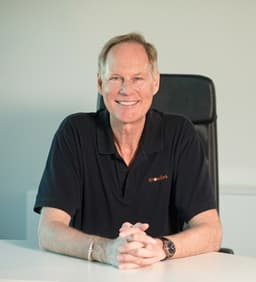
Stu Sjouwerman
CEO and Co-Founder, ReadingMinds.AI
Stu founded KnowBe4 in 2010 and grew it into the world's largest security-awareness training platform before taking it public on the NASDAQ in 2021 and its subsequent acquisition by Vista Equity Partners in 2023. He co-founded ReadingMinds with Marcio Castilho and Alin Irimie, the same leadership team that built KnowBe4. Author of the USA Today bestseller Agent-Powered Growth and a regular contributor to Forbes Tech Council and Greenbook on AI, agentic marketing, and customer intelligence.
Know what your customers feel. Not just what they say.
ReadingMinds conducts AI voice interviews that classify emotion type and intensity. Try a 3-minute Live Test Drive with Emma.
Start 3‑Minute Live Test Drive