Why Trust Must Be Engineered Into AI Products, Not Bolted On
In a world flooded with AI-generated content, cloned voices, and synthetic data, trust has quietly become the most valuable asset in marketing. Not brand trust. Not campaign trust. System trust.
If you can't prove where your data came from, how it was handled, and what influenced the insights, your analytics are just pretty slides.
That's why trust must move from legal documents and compliance checklists into the product itself. It has to be engineered.
The Proof Problem
Think about it this way: when a marketing team runs customer interviews, they're making decisions that affect spend, messaging, and revenue. If someone asks, "How do we know this quote is real?" or "Can this be tampered with?", you need more than a shrug. You need evidence.
Engineering Trust
Engineering trust means:
- Proving the source of the data at capture
- Making records tamper-evident in storage
- Securing every API and connector with least-privilege access
- Attaching a clear provenance trail to every insight
In simple terms: every insight should come with a receipt.
Trust Removes Friction
This isn't about adding friction. It's about removing doubt. When procurement sees built-in audit logs, retention controls, and admin kill switches, security stops being a blocker. It becomes a reason to buy.
Marketers care about speed. Finance cares about ROI. Security cares about risk. An engineered trust layer aligns all three.
The Next Standard
The next generation of marketing platforms won't just deliver insights. They'll deliver proof. And in a market where synthetic noise is exploding, the companies that can prove authenticity, not just claim it, will win.
Trust isn't soft. It's infrastructure.
Learn more about our security posture: Trust Center or Procurement Pack.
About the author

Stu Sjouwerman
CEO and Co-Founder, ReadingMinds.AI
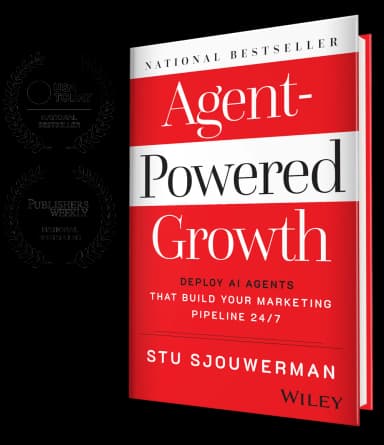
Stu founded KnowBe4 in 2010 and grew it into the world's largest security-awareness training platform before taking it public on the NASDAQ in 2021 and its subsequent acquisition by Vista Equity Partners in 2023. He co-founded ReadingMinds with Marcio Castilho and Alin Irimie, the same leadership team that built KnowBe4. Author of the USA Today bestseller Agent-Powered Growth and a regular contributor to Forbes Tech Council and Greenbook on AI, agentic marketing, and customer intelligence.
Know what your customers feel. Not just what they say.
ReadingMinds conducts AI voice interviews that classify emotion type and intensity. Try a 3-minute Live Test Drive with Emma.
Start 3‑Minute Live Test Drive