Turning AI Interviews into Action: Research Ideas to Inspire Your Team
Collecting customer insights is only valuable if you can turn them into action. Here's our seven-step framework for converting qualitative conversations into business intelligence that drives results.
Step 1: Define Clear Objectives
Before launching any study, articulate exactly what decisions the research will inform. Vague goals lead to vague insights.
Step 2: Design for Depth
Structure your interview guide to encourage storytelling, not one-word answers. Emma will probe naturally, but starting questions matter.
Step 3: Segment Strategically
Don't interview "customers." Interview specific segments. The insights from power users differ dramatically from those at risk of churning.
Step 4: Watch for Emotional Signals
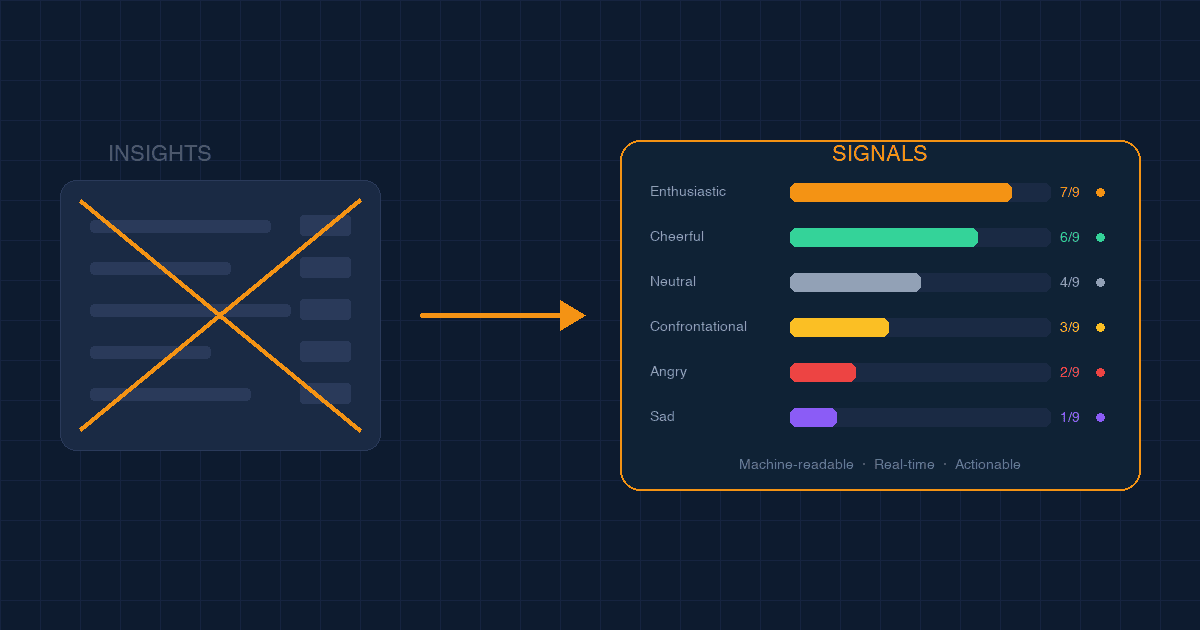
Pay attention to where Emma detects hesitation, enthusiasm, or frustration. These emotional moments often contain the most valuable insights.
Step 5: Synthesize Themes
Look for patterns across interviews. What do multiple customers mention? Where do their emotional responses align?
Step 6: Create Actionable Recommendations
Transform themes into specific recommendations. "Customers are confused about pricing" becomes "Add a pricing calculator to the homepage."
Step 7: Close the Loop
Share findings with stakeholders, implement changes, and measure results. Then research again to see if you solved the problem.
The Continuous Learning Loop
The best organizations don't treat research as a one-time event. They build continuous feedback loops that keep them connected to customer reality.
Experience voice-based research yourself: try the 3-Minute Live Test Drive or see what a report looks like.
About the author

Stu Sjouwerman
CEO and Co-Founder, ReadingMinds.AI
Stu founded KnowBe4 in 2010 and grew it into the world's largest security-awareness training platform before taking it public on the NASDAQ in 2021 and its subsequent acquisition by Vista Equity Partners in 2023. He co-founded ReadingMinds with Marcio Castilho and Alin Irimie, the same leadership team that built KnowBe4. Author of the USA Today bestseller Agent-Powered Growth and a regular contributor to Forbes Tech Council and Greenbook on AI, agentic marketing, and customer intelligence.
Know what your customers feel. Not just what they say.
ReadingMinds conducts AI voice interviews that classify emotion type and intensity. Try a 3-minute Live Test Drive with Emma.
Start 3‑Minute Live Test Drive