Voice Is the New Interface for Human + AI: Why the Next Great UX Won't Feel Like Software
For years, software interfaces have mostly been recycled from older worlds. A filing cabinet became a database. A paper form became a webpage. A desktop app became a mobile app squeezed onto a smaller screen. Even now, much of AI still shows up as a blank chat box and expects the user to figure out the magic words.
That is not the end state.
The real opportunity is to build interface patterns that fit how people actually think, decide, and work with AI. Voice is one of the strongest candidates.
Why Voice Fits the Way Humans Actually Think
Voice is natural, fast, and collaborative. Humans do not think in menus. They think in conversation. They clarify, interrupt, ask follow-up questions, change direction, and react in real time. That makes voice uniquely suited to a human-plus-AI workflow where the goal is not just getting an answer, but building trust, refining ideas, and taking action.
Consider the difference between typing a prompt into a chat box and speaking your intent out loud. When you type, you self-edit. You second-guess your phrasing. You try to craft the "perfect" input because the interface rewards precision. When you speak, you think out loud. You iterate naturally. The interface rewards exploration, not perfection.
This is not a small distinction. It changes the entire dynamic between human and machine.
Voice Solves the Blank Box Problem
Voice also solves a major design problem in AI: how to guide people through powerful systems without overwhelming them. A blank box creates paralysis. A conversation creates momentum.
Instead of forcing users to type perfect prompts, voice lets them explore, correct, and steer the AI the same way they would work with a smart colleague. The AI can ask clarifying questions. The human can redirect. Neither side needs to get it right on the first try.
This is why completion rates for voice-based AI interactions consistently outperform text-based ones. When the interface matches how people naturally communicate, friction drops and engagement rises.
The Bridge Between Human Judgment and Machine Execution
Most important, voice is a better bridge between human judgment and machine execution. The AI can do the heavy lifting: processing data, detecting patterns, surfacing signals. But the human stays in the loop, shaping intent, validating output, and deciding what happens next.
This is the difference between AI that replaces human input and AI that amplifies it. The best outcomes come from the combination, and voice is the most natural medium for that collaboration.
Think about how decisions actually get made in organizations. Not through dashboards and reports alone, but through conversations. Strategy sessions. One-on-ones. Customer calls. The information that drives action is almost always spoken before it is documented. Voice-first AI meets decision-makers where they already work.
What This Means for Customer Intelligence
In customer research specifically, voice unlocks a dimension that text interfaces cannot touch: emotional signal. When a customer types "the product is fine," you get five words. When they say it, you hear the hesitation, the flat tone, the lack of conviction. That emotional layer is where the real insight lives, and it only surfaces in voice.
This is why AI voice interviews consistently uncover signals that surveys, NPS scores, and chat-based research miss entirely. The interface is not just collecting data; it is creating the conditions for honest, nuanced, real-time human expression.
The Next Great Interface
The next great interface will not feel like software.
It will feel like working with an intelligent partner who listens, adapts, and responds in real time. Not a form to fill out. Not a prompt to engineer. A conversation that moves at the speed of thought.
That is why voice matters now. Not as a novelty. Not as an accessibility feature. As the natural interface for a world where humans and AI work together on the things that matter most.
Experience voice-based research yourself: try the 3-Minute Live Test Drive or see what a report looks like.
About the author

Stu Sjouwerman
CEO and Co-Founder, ReadingMinds.AI
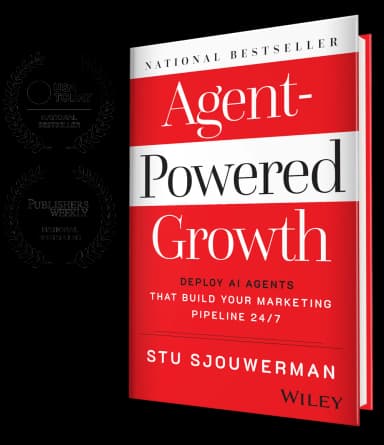
Stu founded KnowBe4 in 2010 and grew it into the world's largest security-awareness training platform before taking it public on the NASDAQ in 2021 and its subsequent acquisition by Vista Equity Partners in 2023. He co-founded ReadingMinds with Marcio Castilho and Alin Irimie, the same leadership team that built KnowBe4. Author of the USA Today bestseller Agent-Powered Growth and a regular contributor to Forbes Tech Council and Greenbook on AI, agentic marketing, and customer intelligence.
Know what your customers feel. Not just what they say.
ReadingMinds conducts AI voice interviews that classify emotion type and intensity. Try a 3-minute Live Test Drive with Emma.
Start 3‑Minute Live Test Drive