When AI Remembers Wrong, It Scales Wrong
AI agents are entering a new phase. They no longer just act in the moment: they remember. Across leading platforms, memory is becoming a core capability: persistent context, learned preferences, and inferred patterns that shape decisions over time.
On paper, this sounds like progress.
In reality, it introduces a new and more dangerous failure mode.
Because memory doesn’t just store facts. It stores interpretations.
And if those interpretations are wrong, they don’t stay wrong once. They get reused, reinforced, and amplified.
The shift: from stateless to memory-driven decisions
AI systems are evolving from stateless responses to behavior shaped by accumulated context. Instead of evaluating each interaction independently, agents now rely on what they believe they know from prior conversations.
This is a structural shift.
Decisions are no longer based on the present moment alone. They are influenced by what the system thinks it has learned about the human over time.
That changes everything.
The risk: compounding misinterpretation
If an agent misreads a signal, say, hesitation in a buyer’s tone, and interprets it as lack of interest, that assumption gets stored. Future interactions then build on that flawed belief.
Engagement is reduced. The system pulls back. The human disengages further.
From the system’s perspective, the pattern confirms itself.
From reality’s perspective, it was wrong from the start.
This is the danger: not a single bad decision, but a system that becomes more confident in its own misinterpretation.
The opportunity: grounding memory in reality
Most platforms are racing to build memory. Few are questioning whether that memory is accurate.
This creates a critical gap.
AI can simulate, reason, and even evaluate itself. But it cannot reliably detect subtle human signals, the shifts in confidence, hesitation, or trust that define what is actually happening in a conversation.
That’s where a new layer emerges: one that continuously validates and corrects what the system believes.
The real problem with memory
The industry narrative is simple: more context leads to better decisions.
But context is only valuable if it is correct.
Otherwise, memory becomes bias.
It locks systems into outdated or incorrect assumptions and makes them harder, not easier, to correct.
In human interactions, where nuance and timing matter most, that’s a critical flaw.
A new requirement: continuous correction
To make AI systems truly effective, we need more than memory. We need mechanisms that ensure memory stays aligned with reality.
That means:
- Detecting when current signals contradict past assumptions
- Updating interpretations in real time
- Preventing outdated beliefs from shaping new decisions
This isn’t about adding more data. It’s about maintaining the integrity of the data already being used.
The bottom line
The next wave of AI will not be defined by how much it can remember.
It will be defined by how accurately it remembers.
Because in real-world interactions, decisions are not judged by how consistent they are with the past.
They are judged by how well they reflect what is true in the present.
And when memory drifts from reality, the cost compounds quickly.
The systems that win will not just learn. They will know when what they’ve learned is wrong.
About the author

Stu Sjouwerman
CEO and Co-Founder, ReadingMinds.AI
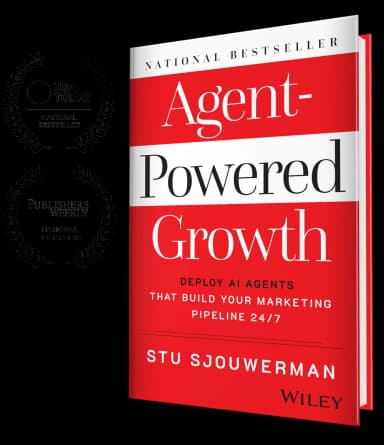
Stu founded KnowBe4 in 2010 and grew it into the world's largest security-awareness training platform before taking it public on the NASDAQ in 2021 and its subsequent acquisition by Vista Equity Partners in 2023. He co-founded ReadingMinds with Marcio Castilho and Alin Irimie, the same leadership team that built KnowBe4. Author of the USA Today bestseller Agent-Powered Growth and a regular contributor to Forbes Tech Council and Greenbook on AI, agentic marketing, and customer intelligence.
Know what your customers feel. Not just what they say.
ReadingMinds conducts AI voice interviews that classify emotion type and intensity. Try a 3-minute Live Test Drive with Emma.
Start 3‑Minute Live Test Drive