When Emotion Becomes Data: The Next Shift in Customer Intelligence
For decades, customer emotion lived in the realm of intuition. Experienced salespeople could "read" prospects. Skilled support reps could "sense" frustration. But emotion couldn't be systematized, scaled, or analyzed.
That's changing.
The Datafication of Emotion
Modern AI can transform emotional signals into structured data:
- Sentiment scores: Quantified positive/negative indicators
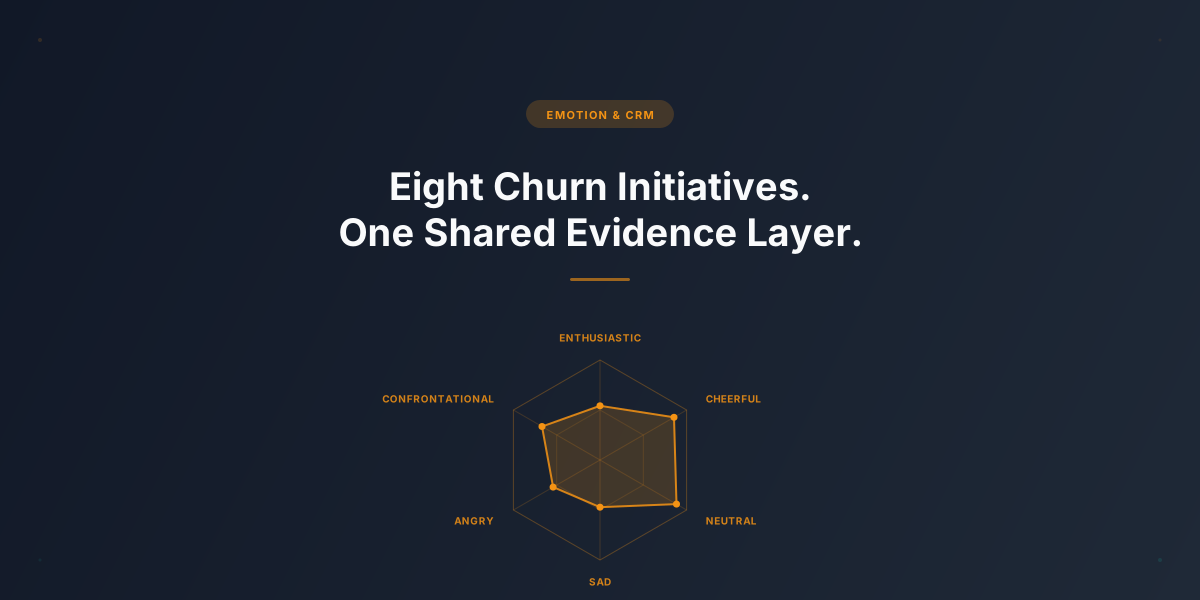
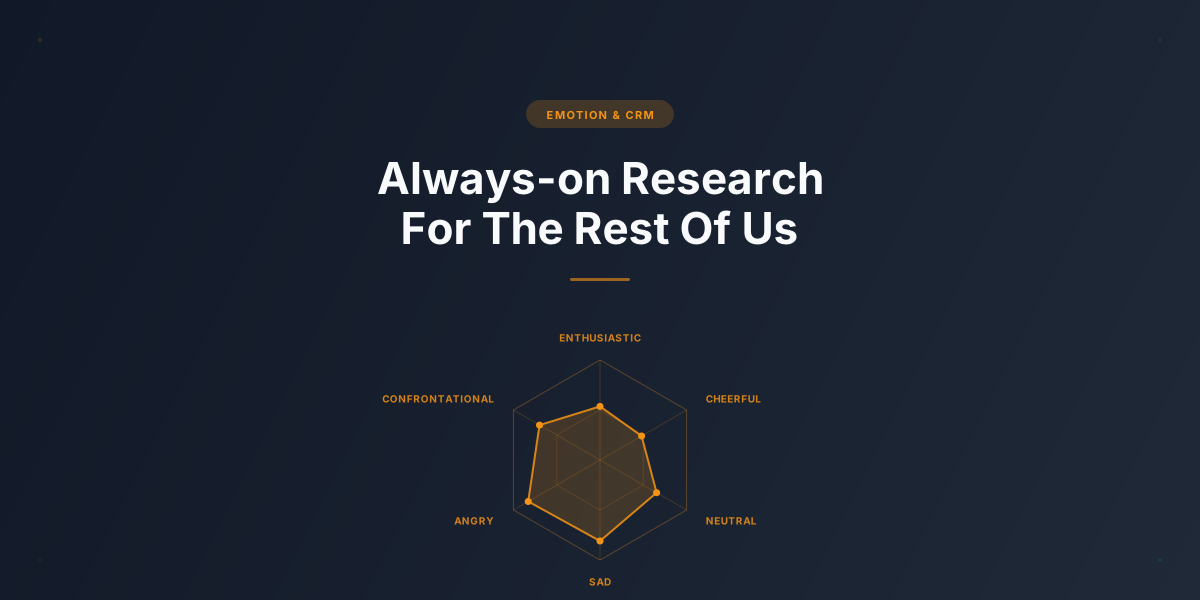
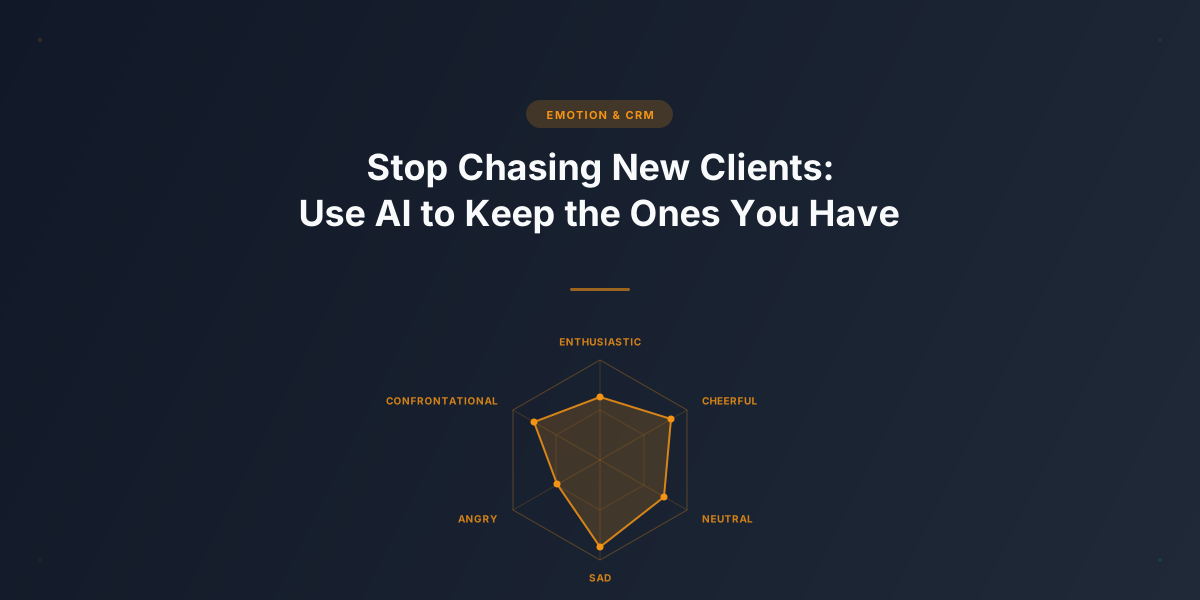
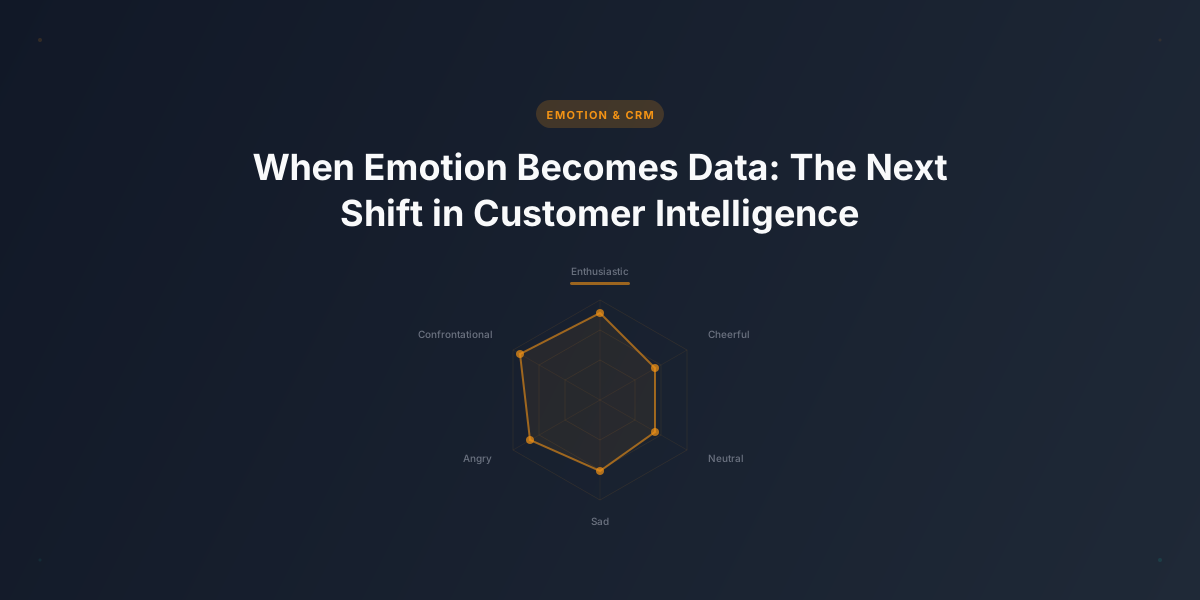
- Emotion categories: Sad, angry, confrontational, neutral, cheerful, enthusiastic
- Intensity levels: Mild to strong emotional markers
- Temporal patterns: How emotion changes over time
Why This Matters
When emotion becomes data, it becomes actionable:
Churn Prediction
Traditional churn models use behavioral signals: declining usage, reduced engagement, and support tickets. These are lagging indicators.
Emotional data adds leading indicators: declining enthusiasm, creeping anger, and sadness about renewals. You see churn coming before behavior changes.
Lead Prioritization
Traditional lead scoring uses firmographic and behavioral data. Emotional data adds momentum indicators:
- Is this prospect excited or just going through motions?
- Are they confident in their evaluation or uncertain?
- Do they show genuine urgency or polite interest?
Customer Segmentation
Traditional segments group by demographics or behavior. Emotional segments group by relationship health:
- Enthusiastic advocates
- Satisfied but passive
- At-risk despite good metrics
- Already decided to leave
The Technical Foundation
Emotion data requires:
Collection Mechanism
Voice-based AI interviews that capture emotional signals at scale.
Processing Pipeline
Real-time analysis that transforms audio into structured emotional data.
Integration Layer
APIs that feed emotional data into existing systems: CRM, CDP, and analytics.
Action Framework
Workflows that trigger based on emotional signals.
Getting Started
- Pick one use case: Churn prediction is often easiest to demonstrate value
- Establish baselines: What does normal emotional health look like?
- Identify signals: Which emotional patterns correlate with outcomes?
- Build triggers: What actions should emotional signals prompt?
Emotion has always mattered to business. Now it can be measured.
Learn how ReadingMinds detects these signals: ReadingMinds Expression Fingerprint or see a real report.
About the author

Stu Sjouwerman
CEO and Co-Founder, ReadingMinds.AI
Stu founded KnowBe4 in 2010 and grew it into the world's largest security-awareness training platform before taking it public on the NASDAQ in 2021 and its subsequent acquisition by Vista Equity Partners in 2023. He co-founded ReadingMinds with Marcio Castilho and Alin Irimie, the same leadership team that built KnowBe4. Author of the USA Today bestseller Agent-Powered Growth and a regular contributor to Forbes Tech Council and Greenbook on AI, agentic marketing, and customer intelligence.
Know what your customers feel. Not just what they say.
ReadingMinds conducts AI voice interviews that classify emotion type and intensity. Try a 3-minute Live Test Drive with Emma.
Start 3‑Minute Live Test Drive