Why People Don't Trust Bad AI Voices: What 10,000 Listeners Reveal About Synthetic Speech
Voice is becoming the front door of modern software. Customer support calls, AI assistants, and conversational agents all rely on synthetic speech. But a recent report highlighted by TechRadar shows a simple truth: when the voice feels artificial, trust collapses almost instantly.
10,000 Listeners, 20 Voice Models, One Clear Finding
A global study conducted by the voice-training platform Vocal Image evaluated 20 AI text-to-speech models with more than 10,000 listeners. Participants listened to voices and rated them across qualities like warmth, clarity, and monotony. The results were striking: people tended to dislike the voice as soon as they realized it was synthetic. In other words, the moment the illusion breaks, trust breaks with it.
The study also revealed large quality differences between voice models. A Chinese startup called MiniMax produced the most trusted and realistic voice, outperforming systems from major providers such as Google, Amazon, and Microsoft. The highest-rated system scored roughly three times better than the lowest-ranked model, showing how dramatically quality affects user perception.
It Is Not About Accuracy; It Is About Perception
What listeners cared about most was not technical accuracy. It was human perception. Voices that sounded confident, expressive, and natural scored much higher than those that simply read words correctly. Researchers measured emotional reactions and listening behavior rather than just asking for opinions, revealing that subtle cues like tone, rhythm, and warmth strongly influence trust.
This matters because voice interfaces are moving into high-stakes environments: education, healthcare, sales, and customer service. In those situations, a robotic voice does not just sound awkward. It can damage the credibility of the product or brand using it. Experts warn that choosing the wrong voice system can become a brand liability when trust is essential.
Why This Matters for Customer Intelligence
At ReadingMinds, we see the same pattern from the other side. Our AI voice interviews are designed to feel natural and conversational precisely because trust determines the quality of insight you get back. When a customer trusts the voice they are speaking with, they open up. They share real frustrations, real hesitations, and real enthusiasm. When the voice feels robotic, they give you surface-level answers that tell you nothing.
The takeaway from this research is simple. Generating speech is no longer the hard problem. Creating a voice people emotionally trust is the real challenge. As AI becomes more conversational, the winners will not be the companies with the biggest models. They will be the ones that make machines sound genuinely human.
Experience voice-based research yourself: try the 3-Minute Live Test Drive or see what a report looks like.
About the author
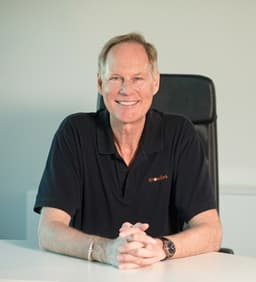
Stu Sjouwerman
CEO and Co-Founder, ReadingMinds.AI
Stu founded KnowBe4 in 2010 and grew it into the world's largest security-awareness training platform before taking it public on the NASDAQ in 2021 and its subsequent acquisition by Vista Equity Partners in 2023. He co-founded ReadingMinds with Marcio Castilho and Alin Irimie, the same leadership team that built KnowBe4. Author of the USA Today bestseller Agent-Powered Growth and a regular contributor to Forbes Tech Council and Greenbook on AI, agentic marketing, and customer intelligence.
Know what your customers feel. Not just what they say.
ReadingMinds conducts AI voice interviews that classify emotion type and intensity. Try a 3-minute Live Test Drive with Emma.
Start 3‑Minute Live Test Drive