AI Agents Are Becoming Buyers. What Customer Evidence Should They Be Allowed to Buy and Trust?
AI agents are moving beyond retrieving information and recommending actions. They are beginning to purchase the resources they need to complete a task.
Amazon Bedrock AgentCore Payments shows the direction. An agent can encounter a paid API, Model Context Protocol service, data source, web resource, or another agent, evaluate whether it needs the resource, pay for access, and continue working without interrupting its reasoning process. AWS applies spending limits outside the model and records each transaction for audit and cost control. You can read the AWS announcement for the details.
That changes more than software purchasing. It changes how business evidence gets acquired.
Imagine a marketing agent investigating a decline in conversions. It could purchase market data, competitor intelligence, social sentiment, analytics, and customer-research services before recommending what the company should do next. Which raises a question most agent roadmaps have not answered yet: how should an AI agent decide which customer evidence is worth buying and trusting?
When agents can buy evidence, price becomes a trap
The obvious way for an agent to choose between evidence sources is price, speed, and whether the API returns a confident answer. Every one of those signals can point at the worst option.
- A cheap data source may be outdated.
- A customer quote may come from the wrong segment.
- A public review may reflect a highly vocal minority.
- A research report may contain genuine statements collected through leading questions.
- A polished summary may hide the responses that contradict it.
An agent cannot evaluate evidence only by price, speed, or a confident-sounding response. It needs to know what it is buying. And right now, most customer-data services give it no way to find out.
Customer evidence must become machine-evaluable
"Here is our API" will not be enough in an agentic economy. A trustworthy customer-evidence service has to describe itself in terms an agent can actually weigh:
- Evidence class: what kind of evidence this is (first-party interview, survey panel, public review, CRM record).
- Collection method and purpose: how and why the evidence was gathered.
- Participant eligibility: who qualified to be in the study, and who did not.
- Recency: when the evidence was collected.
- Supporting and contradicting responses: what backs the finding and what cuts against it.
- Confidence and limitations: the methodological caveats, stated plainly.
- Response time and cost: what the query takes and what it costs.
- Decision scope: the business decisions this evidence can reasonably support.
These are the same tests a careful human would apply, formalized so a machine can apply them too. They are the machine-readable version of the Customer Evidence Trust Checklist.
What ReadingMinds returns instead of a confident summary
This is where ReadingMinds fits into the agentic workflow. It creates first-party customer evidence through professionally structured interviews, and it preserves what participants said, how they expressed it, the questions and study context that produced the response, and the evidence that challenges the dominant conclusion.
So an outside agent could ask ReadingMinds a real decision question:
"Is there enough customer evidence to conclude that missing a native mobile app is driving enterprise churn?"
Instead of returning another persuasive summary, ReadingMinds returns a governed Evidence Pack:
"Partially supported. A native mobile app comes up among field-sales users, but unreliable notifications are raised almost as frequently. The evidence is 62 days old, several enterprise accounts disagree, and the current study was not designed to justify a full mobile build."
That answer is built to be acted on, or held back:
- It carries a cost and a latency, so a purchasing agent can compare it against other resources.
- It carries provenance and a confidence level, so a decision agent can judge whether more research is needed.
- It carries a defined decision scope, so nobody stretches a churn study into a full mobile-app build.
- It stays inspectable, so a human can open the underlying evidence before authorizing action.
Every ReadingMinds answer is queryable this way through our MCP Server. You can see how the platform exposes Evidence Packs to agents, and how we govern that evidence at our Trust & Compliance Center.
See an Evidence Pack from the inside. The fastest way to understand one is to generate the raw material yourself. In a 3-minute Live Test Drive, Emma runs a short voice interview and shows you the structured read on your own words.
"Won't the agent just buy the cheapest confident answer?"
Left to price and confidence alone, yes, and that is the danger. A blind purchasing agent optimizes for cheap, fast, and self-assured, which rewards exactly the sources most likely to be wrong: stale data, unrepresentative panels, and summaries that sound certain because they dropped the contradictions.
The fix is not a smarter agent. It is machine-readable provenance, so agents can compete on how trustworthy the evidence is, not just how cheap and confident it sounds. An evidence service that can prove eligibility, recency, contradiction, and decision scope should win the purchase, and be worth more, precisely because it makes those things checkable.
The advantage is decision-ready evidence, not more data
AWS is helping agents buy services. The next requirement is helping them buy the right evidence to act on.
Because in an agentic economy, customer data will be easy to purchase. A confident summary will be cheap. What stays scarce, and valuable, is customer evidence an agent can weigh, a human can inspect, and a business can defend.
Want to see what that looks like on your own words? Take a 3-minute Live Test Drive and watch Emma turn a short voice interview into structured evidence in real time.
AWS is helping agents buy services. ReadingMinds helps them buy the evidence worth trusting.
About the author

Stu Sjouwerman
CEO and Co-Founder, ReadingMinds.AI
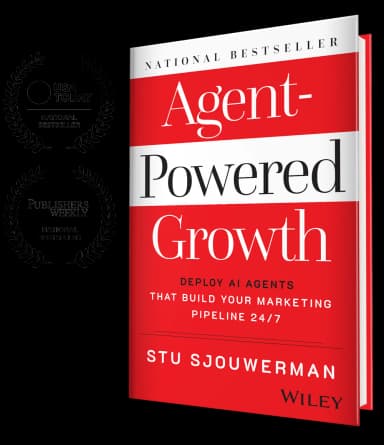
Stu founded KnowBe4 in 2010 and grew it into the world's largest security-awareness training platform before taking it public on the NASDAQ in 2021 and its subsequent acquisition by Vista Equity Partners in 2023. He co-founded ReadingMinds with Marcio Castilho and Alin Irimie, the same leadership team that built KnowBe4. Author of the USA Today bestseller Agent-Powered Growth and a regular contributor to Forbes Tech Council and Greenbook on AI, agentic marketing, and customer intelligence.
Know what your customers feel. Not just what they say.
ReadingMinds conducts AI voice interviews that classify emotion type and intensity. Try a 3-minute Live Test Drive with Emma.
Start 3‑Minute Live Test Drive