AI Hype vs. Reality: 5 Myths About Autonomous Agents and Customer Evidence
AI moved quickly again this week. Agents became easier to discover, purchase, deploy, and connect to business systems. New models became more capable. Enterprise platforms bundled more AI into products customers already own.
The announcements were impressive. The underlying lessons were more important. Here are five of this week's hype claims, and the customer-evidence reality each one skips.
1. Better execution does not create better evidence
Hype: the smartest agent can be trusted to act autonomously.
Reality: new agents can browse, operate CRM systems, modify spreadsheets, create campaigns, and complete complex workflows. That makes them more useful, but it also lets a weak customer assumption become a real business action much faster. An agent may correctly execute a pricing change while being completely wrong about why customers are leaving. The more capable agents become, the more important it is to verify the customer evidence before they act.
2. Customer context and customer evidence are not the same thing
Hype: if AI can access every customer conversation, it understands the customer.
Reality: access is not understanding. CRM records show operational history. Support calls overrepresent customers who encountered problems. Public reviews come from a self-selected group. Sales notes often contain one employee's interpretation of what a buyer meant.
These sources are useful, but they do not automatically answer a carefully defined research question. Professionally collected research begins with the right objective, appropriate participants, neutral questions, disciplined probing, and visible limitations. Combining every available customer signal does not remove those requirements.
3. MCP makes a capability callable, not the research trustworthy
Hype: adding MCP makes a research platform agent-ready.
Reality: agents can increasingly discover research providers, select audiences, estimate costs, launch studies, and retrieve results without leaving their primary workflow. But an agent can execute a bad study perfectly. It can choose the wrong participants, ask leading questions, ignore contradictory responses, or use evidence collected for a completely different purpose. The research process needs an independent methodological gate before weak evidence is created, not merely a connection after the results exist.
4. "Outcome" pricing only works if you define the outcome honestly
Hype: outcome pricing and cheaper models solve AI economics.
Reality: everything depends on how the outcome is defined. If a vendor gets paid when an agent "finishes the task," the system is quietly encouraged to produce an answer even when the correct result is "insufficient evidence."
For customer research, a supported conclusion, a contradicted hypothesis, and a finding that more research is required can all be successful outcomes. The right economic measure is not cost per token, interview, or agent call. It is cost per trustworthy, decision-ready result.
5. Bundling eliminates generic AI features, not specialist evidence
Hype: bundled enterprise AI will eliminate specialist platforms.
Reality: bundling will eliminate generic AI features. CRM vendors can bundle summaries, sentiment analysis, conversational search, and campaign recommendations. General-purpose models can generate surveys, analyze transcripts, and create polished reports. What remains scarce is professional methodology, proprietary evidence, rigorous evaluations, contradiction testing, expression-signal intelligence, and a defensible standard for determining what the evidence can support.
Where ReadingMinds fits
ReadingMinds is not another general-purpose agent. It is the Customer Evidence Guardrail between customer information and consequential action. It determines whether the evidence is eligible, sourced, current, contradiction-tested, and appropriate for the specific decision being considered, the same tests behind the Customer Evidence Trust Checklist. You can see how we govern that evidence at our Trust & Compliance Center.
See it on your own words. In a 3-minute Live Test Drive, Emma runs a short voice interview and shows you the sourced, structured read that a summary can never reconstruct.
AI is becoming better at finding information and taking action. The competitive advantage will belong to the companies that know when the evidence is strong enough to let it proceed.
Because the biggest risk is no longer that your AI cannot act. It is that it acts confidently for the wrong customer reason.
About the author

Stu Sjouwerman
CEO and Co-Founder, ReadingMinds.AI
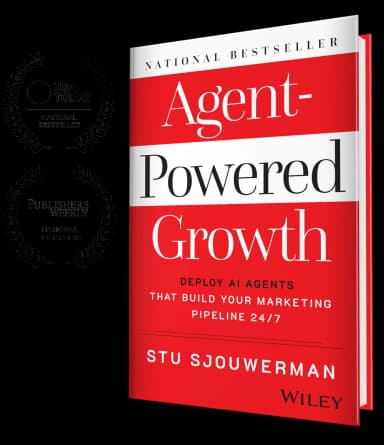
Stu founded KnowBe4 in 2010 and grew it into the world's largest security-awareness training platform before taking it public on the NASDAQ in 2021 and its subsequent acquisition by Vista Equity Partners in 2023. He co-founded ReadingMinds with Marcio Castilho and Alin Irimie, the same leadership team that built KnowBe4. Author of the USA Today bestseller Agent-Powered Growth and a regular contributor to Forbes Tech Council and Greenbook on AI, agentic marketing, and customer intelligence.
Know what your customers feel. Not just what they say.
ReadingMinds conducts AI voice interviews that classify emotion type and intensity. Try a 3-minute Live Test Drive with Emma.
Start 3‑Minute Live Test Drive