Last Week’s Hype vs. Reality: 5 AI Stories That Actually Matter
October 12–18, 2026 | ReadingMinds.ai
Another week, another avalanche of AI announcements. Beneath the headlines, five developments reveal where enterprise AI is heading.
The gap between what AI can do and what businesses can confidently rely on is getting wider.
AI can analyze more data and execute more decisions. But who determines whether its conclusions are supported by customer evidence?
Here are five stories worth watching.
1. AI Analytics Can Explain Why Metrics Move
The Hype: AI analytics can finally explain why everything happens.
The Reality: Salesforce is assembling a stronger customer-intelligence portfolio, but performance diagnosis and customer research answer different questions.
On October 12, Salesforce announced a definitive agreement to acquire Loops, an AI-powered analytics platform that monitors business performance, explains changes in key metrics, and surfaces opportunities. Salesforce had announced a separate definitive agreement to acquire Listen Labs on September 29. That platform conducts customer research and synthesizes feedback. Both transactions remain subject to closing conditions. Read Salesforce’s Loops announcement and its Listen Labs announcement.
Together, these capabilities could eventually connect performance analysis, customer research, and Agentforce execution. They are not yet one completed, integrated workflow.
Identifying what drove a metric change is not necessarily the same as establishing why customers made their decisions. A trend can point to where to investigate. Customer evidence is needed to test the explanation.
ReadingMinds implication: Our distinction is verified customer evidence, not simply another AI-generated explanation.
2. Smarter AI Agents Need More Than Permission
The Hype: Smarter AI agents will automatically make better business decisions.
The Reality: ServiceNow introduced AI Passport, designed to give enterprise agents verifiable identities and govern their access and permitted actions. Read ServiceNow’s announcement.
That is an important distinction: intelligence and authority are different things. But authorization addresses only part of the decision problem.
An agent may have permission to change pricing while relying on unsupported assumptions about customers.
ReadingMinds implication: Enterprise AI needs two safeguards: authorization to act, and sufficient evidence to justify the decision.
3. AI Companies Are Opening More of Their Safety Work to Independent Evaluators
The Hype: AI companies can certify their own models as safe.
The Reality: Anthropic announced that six METR employees have started receiving employee-like access to evaluate its systems and safety practices. METR can publish risk assessments under defined redaction terms. Anthropic says it cannot veto publication, but it determines whether information falls into specified redaction categories. Read Anthropic’s update.
This is a meaningful step toward outside scrutiny, with clear limits on what information evaluators can publish. Independence is not binary; access, publication rights, and redaction rules all matter.
ReadingMinds implication: Research quality must be measurable and open to scrutiny. A convincing interview and a polished summary are not, by themselves, proof that the conclusion is supported.
4. AI Agents May Negotiate on People’s Behalf
The Hype: AI agents understand what their customers want.
The Reality: The Financial Times reported that Anthropic is consulting law firms about norms for AI agents negotiating on behalf of people. Potential tasks include seeking better prices, resolving complaints, or improving contract terms. Read the Financial Times report.
As personal agents take on more delegated tasks, they may compare products, negotiate, or recommend switching without a person making each specific choice themselves.
The transaction is real. The customer’s reason for authorizing or accepting it may not be visible in the transaction record.
ReadingMinds implication: As AI agents influence purchasing decisions, businesses need to distinguish what an agent recommended or did from what customers say matters to them.
5. Enterprise AI Agent Ambition Is Outrunning Demonstrated Returns
The Hype: AI agents are already transforming enterprise productivity.
The Reality: MarTech reported on research from The Martech Weekly’s Enterprise Martech Outlook 2026. While 95.3 percent of surveyed enterprises had AI agents on their roadmaps, only 10.8 percent of agent initiatives were fully scaled in production. The report also found 40.2 percent of martech leaders could not demonstrate a clear financial contribution from their technology investments. Read MarTech’s coverage.
Ambition is not deployment. Deployment is not business value.
ReadingMinds implication: AI systems should be judged by better business outcomes, not by the number of agents deployed or conversations generated. That requires evidence connecting the work to measurable results.
The Bigger Picture
These five developments point toward the same conclusion.
AI can analyze more data.
AI can interview more people.
AI can negotiate more transactions.
AI can make more recommendations.
AI can execute more decisions.
But none of those capabilities automatically establishes whether the underlying customer understanding is correct.
That is the opportunity for the ReadingMinds Customer Evidence Layer: connect business conclusions to customer statements, research methodology, expression signals, contradictory evidence, and independently evaluated research quality. Expression signals describe how responses are expressed in a conversation, not a person’s private state. Learn more in our Trust & Compliance Center.
Not simply collecting more conversations. Not producing another convincing AI summary. The work is to establish what customer evidence supports, what challenges it, and what remains unknown.
The ability to generate an answer is becoming commonplace. Demonstrating why that answer deserves to influence a business decision remains the harder problem.
Read more about why customer evidence is the missing layer in the AI agent economy, or try an adaptive customer conversation in a short Live Test Drive.
About the author

Stu Sjouwerman
CEO and Co-Founder, ReadingMinds.AI
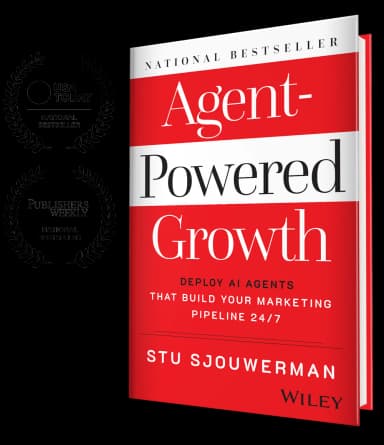
Stu founded KnowBe4 in 2010 and grew it into the world's largest security-awareness training platform before taking it public on the NASDAQ in 2021 and its subsequent acquisition by Vista Equity Partners in 2023. He co-founded ReadingMinds with Marcio Castilho and Alin Irimie, the same leadership team that built KnowBe4. Author of the USA Today bestseller Agent-Powered Growth and a regular contributor to Forbes Tech Council and Greenbook on AI, agentic marketing, and customer intelligence.
Know what your customers feel. Not just what they say.
ReadingMinds conducts AI voice interviews that classify emotion type and intensity. Try a 3-minute Live Test Drive with Emma.
Start 3‑Minute Live Test Drive