Why Customer Evidence Is the Missing Layer in the AI Agent Economy
AI agents are being wired into every business system at once. Salesforce is making its platform available through multiple AI interfaces. Anthropic is moving from models into complete workflows. OpenAI, Google, AWS, and a long tail of startups are shipping agents that get more capable every quarter.
The obvious conclusion is that companies need better agents.
The bigger issue is this: agents can act faster than they can understand customers.
An agent may have access to CRM records, support tickets, product analytics, sales notes, campaign results, and thousands of internal documents. It can find patterns across all of it and make forecasts. What it cannot do from that data alone is explain why the customer behaved that way.
That takes customer evidence. Here is the layer that produces it, and why it is the one tier of the stack almost nobody is building.
The Missing Layer
The emerging enterprise architecture looks like this:
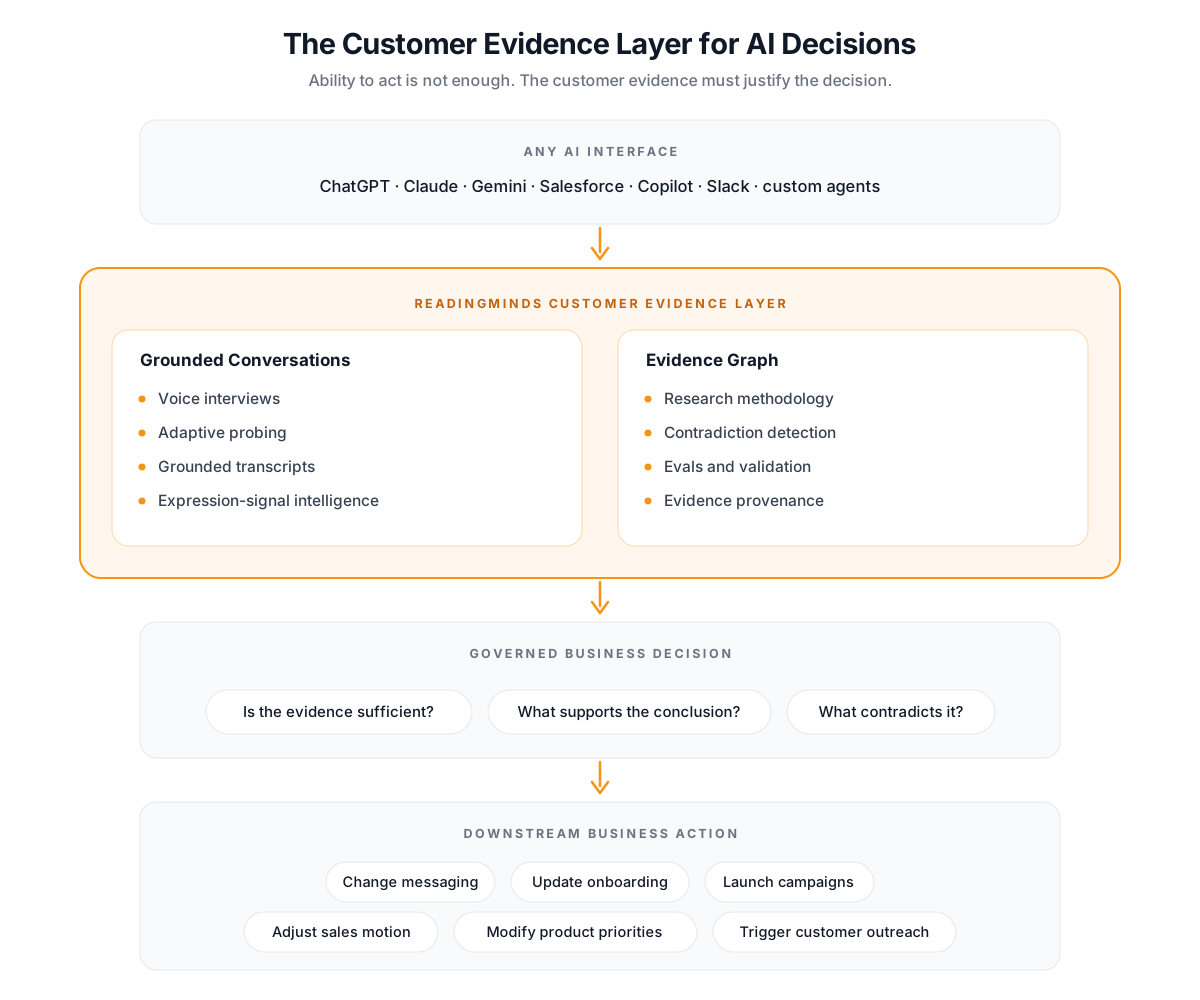
Read it top to bottom. Four tiers, and only one of them is contested.
Any AI interface
ChatGPT, Claude, Gemini, Salesforce, Copilot, Slack, or the agent your team built last month. This tier is commoditizing fast, which is exactly why it is the wrong place to compete. Whichever interface wins, most companies will end up running several of them side by side.
The ReadingMinds customer evidence layer
This is the tier that does not exist yet inside most companies. It has two halves:
- Grounded conversations: voice interviews with real customers, adaptive probing that follows the answer instead of the script, transcripts tied to the exact question that produced them, and expression-signal intelligence that captures how an answer was delivered, not just the words in it.
- Evidence graph: research methodology applied before the first question is asked, contradiction detection across respondents and across time, evals that test whether a finding actually holds, and provenance so every claim traces back to the conversation it came from.
That second half is the unglamorous one, and it is the half that decides whether any of this is usable. The whole tier is built around pseudonymous transcripts and expression signals rather than identity, which is documented in our Trust & Compliance Center.
Governed business decision
Three questions stand between evidence and action. Is the evidence sufficient? What supports the conclusion? What contradicts it? An agent that cannot answer all three has an opinion, not a decision.
Downstream business action
Change messaging. Update onboarding. Launch campaigns. Adjust the sales motion. Modify product priorities. Trigger customer outreach. These are the moves that cost real money when they are wrong.
The key principle is simple: ability to act is not enough. The customer evidence must justify the decision.
Your CRM Knows What Happened. It Does Not Know Why.
CRM data can tell an agent that conversion dropped in a segment, that churn climbed in the second renewal cycle, or that customers stopped opening a feature after week three.
It does not explain why, and that gap is where confident agents get expensive. Given a number and no explanation, a capable model will produce one. It will be fluent, plausible, and internally consistent. It will also be a guess wearing the clothes of a finding, and the campaign built on top of it ships anyway.
The difference between a guess and evidence is not intelligence. It is provenance.
Hear the difference yourself. Take a short Live Test Drive, describe your biggest problem with customer feedback, and listen to how a voice interview probes an answer instead of accepting the first version of it.
The Smartest Move an Agent Can Make Is Noticing That Evidence Is Missing
Instead of guessing, the agent should be able to recognize that the evidence is missing and go ask customers directly.
That is a workflow, not a prompt. It means the agent can:
- Flag that a conclusion is unsupported by the data it already holds.
- Commission a study where question design is governed by research methodology, not by whatever phrasing the model happened to generate first.
- Interview real customers at volume, in voice, in days instead of quarters.
- Return graded evidence with the contradictions surfaced rather than averaged away.
- Hand the decision back with its support and its counterevidence attached.
That is where ReadingMinds fits. It creates a customer evidence layer that sits above foundation models and below business action.
The Durable Value Is the Workflow, Not the Model
Foundation models are improving on a schedule nobody controls, and every improvement arrives for your competitors on the same day it arrives for you. Betting your advantage on which model you call is betting on a commodity that gets cheaper every quarter.
The durable value is the workflow that turns real customer conversations into trusted, traceable, decision-ready evidence. That workflow compounds. Every study adds to the evidence graph. Every contradiction caught makes the next conclusion sharper. Every traced claim makes the next decision faster to approve, because the reviewer can see what it rests on.
Models are rented. An evidence graph is owned.
The Scarce Resource Will Not Be Intelligence
As AI agents become more autonomous, the constraint moves. It stops being how capable the agent is and starts being how well grounded it is in what customers actually said.
Intelligence is being mass produced. Grounded customer understanding is not, because it can only come from customers, and getting it at the speed agents now operate requires an interview engine plus the methodology to keep it honest.
That is the layer ReadingMinds is building.
Where to Go Next
If you want the procurement-grade version of this architecture, our whitepaper The Decision Evidence Layer lays out the five principles, the five-stage pipeline from capture to audit, the evidence schema, an Evidence Pack for security review, and a 12-point adoption checklist. It is free, and no form stands in front of it.
For the failure mode this layer prevents, read Agents Do Not Fail Quietly, They Fail Confidently.
Or skip the reading and go straight at it: take a Live Test Drive and put your own hardest customer question to it.
Agents will not be short on intelligence. They will be short on evidence.
About the author

Stu Sjouwerman
CEO and Co-Founder, ReadingMinds.AI
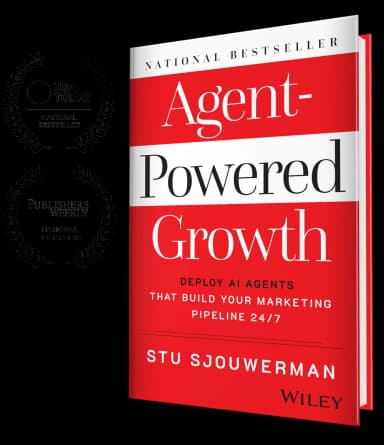
Stu founded KnowBe4 in 2010 and grew it into the world's largest security-awareness training platform before taking it public on the NASDAQ in 2021 and its subsequent acquisition by Vista Equity Partners in 2023. He co-founded ReadingMinds with Marcio Castilho and Alin Irimie, the same leadership team that built KnowBe4. Author of the USA Today bestseller Agent-Powered Growth and a regular contributor to Forbes Tech Council and Greenbook on AI, agentic marketing, and customer intelligence.
Know what your customers feel. Not just what they say.
ReadingMinds conducts AI voice interviews that classify emotion type and intensity. Try a 3-minute Live Test Drive with Emma.
Start 3‑Minute Live Test Drive