The Next AI Breakthrough Isn't Smarter Agents. It's Better Judgment.
Everyone is talking about AI agents. That makes sense. Agents are the visible part of the shift. They schedule meetings, write follow-ups, update CRMs, route tickets, launch campaigns, and increasingly make decisions inside live workflows. They are becoming the execution layer of modern software.
But I think the market is still missing the deeper story.
The Real Breakthrough
The next major breakthrough in AI will not come from agents that can do more things. It will come from agents that can make better decisions before they act.
That is a very different problem.
For the last few years, the AI stack looked like this: a human asked a question, an AI generated an insight, and the human decided what to do next. The human was still the judgment layer.
That model is now being replaced.
We are moving into a world where the workflow itself calls the agent, the agent makes a decision, and the system takes action automatically. No pause. No review step. No human sitting in the middle interpreting a dashboard.
That changes the stakes. Once AI moves from assistant to actor, the bottleneck is no longer intelligence in the abstract. It is judgment in context.
Where Today's Systems Are Still Weak
Most agents can tell you what was said. They can summarize a call, classify a conversation, and generate a reasonable response. But they still struggle with the thing humans instinctively use to make real decisions: emotional signal.
They do not truly understand hesitation. They do not reliably detect trust. They do not know when enthusiasm is real versus polite. They miss the subtle change in a prospect's voice when confidence drops. They do not hear the emotional drift that often shows up before churn, before a no-decision, before a failed close, before a message falls flat.
Yet those are the signals that actually drive outcomes.
A transcript can look positive while a deal is quietly dying. A summary can say "interested" when the buyer is already pulling away. A customer can use the right words while their tone tells a completely different story.
Humans know this. Great sales leaders know it. Great interviewers know it. Great negotiators know it. They listen for what the words do not say.
AI still largely does not.
Emotional Signal Infrastructure
That is why I believe a new category is about to matter a lot: emotional signal infrastructure.
Not sentiment as a shallow label. Not dashboards full of post-call analytics. Not generic "insights."
I mean structured, machine-readable emotional signal that can directly shape what an agent does next.
That is the layer we are building at ReadingMinds. We started from a simple belief: voice is the richest signal humans produce, and emotion is the most underused data inside it. Every conversation contains measurable patterns of confidence, hesitation, enthusiasm, discomfort, trust, and conviction. If you can detect those patterns accurately, you can give software something it has been missing: a better sense of what is actually happening between people.
The Platforms Are Racing Toward Action
That matters because the big platforms are racing toward action. Salesforce is pushing toward a world where CRM, voice, and agents collapse into one operating layer. OpenAI is moving deeper into the workflow stack. Across the market, the direction is clear: tighter loops between data, decision, and action.
In that world, the most valuable companies will not just provide automation. They will provide the signals that determine whether the automation makes the right move.
Think about it this way. A platform like Salesforce may know what happened. OpenAI may know how to generate a response. But neither necessarily knows what the interaction meant emotionally, or what that means for the next best action.
That is the gap. And gaps like this do not stay open forever.
Why Positioning Matters Now
The platforms will absolutely add basic sentiment. They will bundle "good enough" insight. They will flatten anything that looks like a dashboard company or a reporting layer. This is how large platforms usually absorb startups. Not by beating them at their best, but by making them seem optional.
If a company in this space presents itself as analytics, it will get commoditized. If it presents itself as post-hoc insight, it will get bundled. But if it becomes the emotional decision engine inside agent workflows, it becomes something much harder to replace.
The Future
The AI market is moving from summaries to signals, from interfaces to infrastructure, and from human action to machine action. As that happens, the most important input will not just be what was said. It will be what was meant, what was felt, and what changed emotionally in the interaction.
Because when agents become the actors, judgment becomes the product.
And the richest source of judgment is still human conversation. My view is simple: the next important layer in AI is not another model. It is the system that helps agents understand people before they act.
That is the future ReadingMinds is building toward.
See how ReadingMinds powers agent workflows: explore the platform or try the 3-Minute Live Test Drive.
About the author
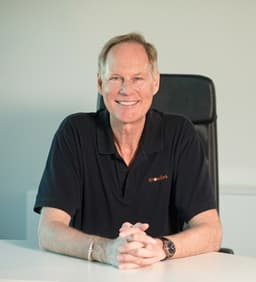
Stu Sjouwerman
CEO and Co-Founder, ReadingMinds.AI
Stu founded KnowBe4 in 2010 and grew it into the world's largest security-awareness training platform before taking it public on the NASDAQ in 2021 and its subsequent acquisition by Vista Equity Partners in 2023. He co-founded ReadingMinds with Marcio Castilho and Alin Irimie, the same leadership team that built KnowBe4. Author of the USA Today bestseller Agent-Powered Growth and a regular contributor to Forbes Tech Council and Greenbook on AI, agentic marketing, and customer intelligence.
Know what your customers feel. Not just what they say.
ReadingMinds conducts AI voice interviews that classify emotion type and intensity. Try a 3-minute Live Test Drive with Emma.
Start 3‑Minute Live Test Drive