Your NPS Score Is Not The Problem. Your NPS Program Is.
In my latest Forbes Technology Council piece, Your NPS Score Is Not The Problem, Your NPS Program Is, I argue that the issue in most B2B customer research programs is not the metric. It is the operating model surrounding it.
The Numbers That Do Not Add Up
Around 80% of B2B companies still run NPS. Gartner predicted in 2021 that more than 75% would abandon it. Five years later, that has not happened.
At the same time, B2B research suggests NPS correlates only about 54% with actual retention likelihood.
Both things can be true. NPS is sticky and useful as a continuity metric. NPS on its own is not a reliable predictor of what B2B customers will do next.
The gap between those two facts is where the real problem lives.
One Score Cannot Represent A Buying Committee
A B2B customer is not one person. It is a committee. Users, admins, security reviewers, procurement, an economic buyer, and one or two executives who never fill out surveys.
A customer rating your company 9 out of 10 can still be struggling badly with onboarding. Another customer, labeled a detractor after a single support incident, may be your strongest expansion opportunity for the next twelve months.
A single score cannot possibly capture and represent that complexity.
The Better Question
The question worth asking is no longer, what is our NPS?
It is, what are our customers revealing that our teams have yet to act on?
That reframing changes what the customer research function is supposed to produce. Not another number. A shared body of evidence that every team can query, drawn from interviews, surveys, and support interactions rather than a single quarterly survey.
Where AI Changes The Equation
AI can now aggregate qualitative feedback across silos and turn it into something teams can actually query. Instead of exports and slides, product, customer success, marketing, and executives share the same customer memory.
That is what a decision layer above NPS looks like. NPS becomes one signal among many, not a stand-in for the full customer experience.
At ReadingMinds, every interview generates participant quotes, transcript references, study context, and independently measured expression signals. Every conclusion links back to the evidence behind it. The whole point is that a leader should be able to see why the recommendation should be trusted before authorizing action.
Read more about how we handle expression signals, retention, and governance in our Trust & Compliance Center.
Keep The Score, Change The Program
The recommendation in the Forbes piece is not to throw NPS away. It is to stop letting a siloed program pretend to be the operating system for customer truth.
Keep the score for continuity. Put it inside a shared customer intelligence layer where every study, quote, and objection becomes reusable across the company.
Read the full piece on Forbes, or download the longer treatment in our End of Siloed NPS whitepaper.
Take the Live Test Drive and see what a decision-layer replacement for NPS actually looks like.
About the author

Stu Sjouwerman
CEO and Co-Founder, ReadingMinds.AI
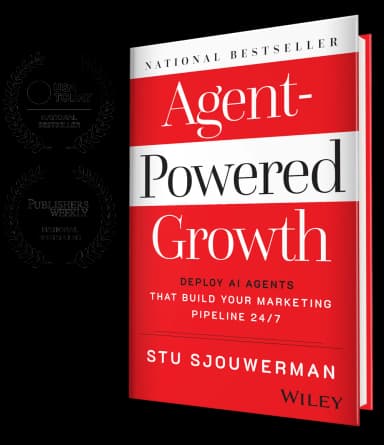
Stu founded KnowBe4 in 2010 and grew it into the world's largest security-awareness training platform before taking it public on the NASDAQ in 2021 and its subsequent acquisition by Vista Equity Partners in 2023. He co-founded ReadingMinds with Marcio Castilho and Alin Irimie, the same leadership team that built KnowBe4. Author of the USA Today bestseller Agent-Powered Growth and a regular contributor to Forbes Tech Council and Greenbook on AI, agentic marketing, and customer intelligence.
Know what your customers feel. Not just what they say.
ReadingMinds conducts AI voice interviews that classify emotion type and intensity. Try a 3-minute Live Test Drive with Emma.
Start 3‑Minute Live Test Drive