OpenAI Is Making Evidence the Standard. Customer Decisions Need It Too.
The enterprise AI conversation is shifting. The question is no longer simply whether an agent can produce an answer or complete a task. It is whether the organization can inspect the evidence that justifies the result.
Two OpenAI announcements on September 10 make that shift clear.
Its new Data agent in ChatGPT connects to approved company data, investigates business questions, and lets users examine the evidence behind findings. It uses business definitions and existing data permissions rather than treating every accessible record as interchangeable information. ChatGPT for Financial Services takes the same principle into financial research: granular citations connect figures and claims to specific source material, so bankers can inspect the supporting tables and passages as their analysis develops, alongside access controls, configurable retention, and audit-log exports.
Evidence inspection is becoming part of the workflow, not an afterthought.
"Show me the evidence" is becoming the enterprise default
For ReadingMinds, these announcements reinforce a central thesis: AI needs grounded customer evidence with documented provenance before it is allowed to make decisions.
OpenAI is bringing that expectation to enterprise and financial data. The opportunity for customer intelligence is to bring it to the complete customer evidence workflow. For financial analysis, the question is "show me the evidence behind the number." For customer decisions, it becomes "show me the real customers, grounded transcripts, research methodology, and expression signals that justify the conclusion."
A citation shows where a statement came from, not what it can support
Imagine a marketing agent notices declining conversions and recommends a discount. It can cite a CRM report showing lost opportunities. It can retrieve support conversations mentioning price. Every source may be genuine.
But do those sources establish that pricing is the problem?
- Perhaps the comments came from the wrong customer segment.
- Perhaps they predate a packaging change.
- Perhaps customers discussing implementation difficulties were left out because their answers did not match the agent's initial hypothesis.
A citation establishes where a statement came from. It does not automatically establish what that statement can support. Those are two different guarantees, and enterprise decisions need the second one.
What customer evidence needs beyond a citation
To move from "cited" to "trustworthy," a customer conclusion has to travel with its context:
- Who participated, and whether they were the right people for this question.
- What they were asked, in what wording.
- When the conversation occurred, so age is visible.
- Which responses support the finding, and which challenge it, rather than only the ones that fit.
- How the answer was delivered. Expression signals add context about how something was said, but they should not replace the participant's words or become proof of motive.
That last point matters: expression is context, not a verdict on what a person privately intended. You can see how we govern that boundary, and the provenance behind it, at our Trust & Compliance Center.
From a citation to a documented path
ReadingMinds connects voice interviews with source-linked findings and structured expression signals. The goal is not another persuasive summary. It is a documented path from the customer conversation to the conclusion a person or agent is considering, which is exactly what the Customer Evidence Trust Checklist is built to test.
We are building open, embeddable customer evidence workflow infrastructure for traditional and AI-native CRM, marketing, service, and enterprise agent-to-agent ecosystems. That means helping partners create and use customer evidence inside their existing workflows, while preserving methodology, provenance, and defined guardrails. You can see how the platform exposes that evidence to agents.
See a documented path for yourself. In a 3-minute Live Test Drive, Emma runs a short voice interview and shows you the sourced, structured read on your own words, traceable back to the moment it was said.
"Doesn't inspectable sourcing already solve this?"
It is a fair question, and OpenAI's move toward granular citations is genuinely the right direction. But a citation and a justification are not the same thing. A perfectly cited support ticket from the wrong segment, collected before a packaging change, is still cited and still insufficient.
Provenance is necessary, not sufficient. On top of "where did this come from," customer decisions need eligibility, recency, and contradiction-testing: the right participants, current enough evidence, and an active search for the customers who disagreed. Inspectable sourcing gets you to the door. It does not tell you the conclusion is strong enough to walk through it.
Ability to act is not enough
OpenAI's announcements do not make every AI answer trustworthy. They signal something more important: showing the evidence is becoming an enterprise expectation. Customer decisions deserve the same standard.
Want to see what a documented customer conclusion looks like? Take a 3-minute Live Test Drive and watch Emma turn a short voice interview into structured, source-linked evidence in real time.
Ability to act is not enough. The customer evidence must justify the decision.
About the author

Stu Sjouwerman
CEO and Co-Founder, ReadingMinds.AI
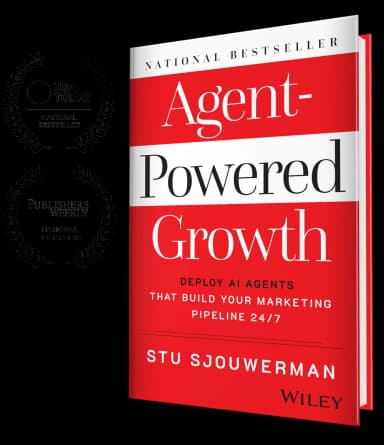
Stu founded KnowBe4 in 2010 and grew it into the world's largest security-awareness training platform before taking it public on the NASDAQ in 2021 and its subsequent acquisition by Vista Equity Partners in 2023. He co-founded ReadingMinds with Marcio Castilho and Alin Irimie, the same leadership team that built KnowBe4. Author of the USA Today bestseller Agent-Powered Growth and a regular contributor to Forbes Tech Council and Greenbook on AI, agentic marketing, and customer intelligence.
Know what your customers feel. Not just what they say.
ReadingMinds conducts AI voice interviews that classify emotion type and intensity. Try a 3-minute Live Test Drive with Emma.
Start 3‑Minute Live Test Drive