Why Revenue Misses Show Up in Conversations First
The hardest moment in revenue is not the quarter you miss the number. It is two weeks before, when the gap is already baked in but no one can see it yet. The forecast still says green. The pipeline reports look reasonable. The deals on the board are technically still open. By the time the dashboard shows a problem, the quarter is over.
I wrote in Forbes Tech Council this month about the five patterns that show up before a revenue miss. They are leading indicators. They precede the visible problem by weeks, sometimes longer. Catch them and you act with time to spare. Miss them and you act after the gap is on the board.
Why CRM Dashboards Miss the Patterns
Every revenue team relies on the CRM dashboard. It is good at recording what happened: how many deals moved stages, how much pipeline was added, how many calls were logged. It is much worse at telling you what is about to happen, because the inputs to the dashboard are themselves trailing.
A stage change is recorded after a rep moves the deal. The rep moves the deal after they have a reason to. The reason takes shape over weeks of conversations the dashboard never sees. By the time a deal slips from stage 4 to stage 3, the signals that produced the slip happened in calls and demos and emails that were not captured in any structured way.
The leading indicators live in the conversations, not in the fields.
What a Conversational Leading Indicator Looks Like
A buyer who used to be Enthusiastic on calls is now Neutral. A champion who was Confrontational about the legacy vendor in March is Cheerful about them in June. A demo that produced six questions last quarter produces two this quarter. These are signals. They precede the deal slip by an entire sales cycle, sometimes two.
The six expression signals our system tags (Sad, Angry, Confrontational, Neutral, Cheerful, Enthusiastic) describe how a response is expressed in the conversation, not what a person privately feels. But the pattern across many conversations, tracked over time, becomes a leading indicator no CRM field captures.
How to Build the Layer
What ReadingMinds adds is the layer underneath the dashboard. Short voice interviews moderated by Emma run on the accounts that matter most. Each call produces an expression-tagged transcript with per-turn signal scores. Aggregate them across an account, a cohort, or a quarter, and the patterns surface before the deal moves.
You can read more about how we handle data, retention, and privacy in our Trust & Compliance Center.
What to Do With the Patterns
The teams I see catching revenue misses early all do the same thing. They treat the conversational signal as the primary leading indicator and the CRM stage as the trailing one. When the signal degrades on an account two quarters from renewal, they intervene then, not on renewal day. When five accounts in a segment all start sounding Confrontational about pricing, they treat that as a pricing problem, not a discount problem.
Read the full Forbes piece via the Press page, or start a free 3-minute Live Test Drive and hear what a leading indicator sounds like.
About the author

Stu Sjouwerman
CEO and Co-Founder, ReadingMinds.AI
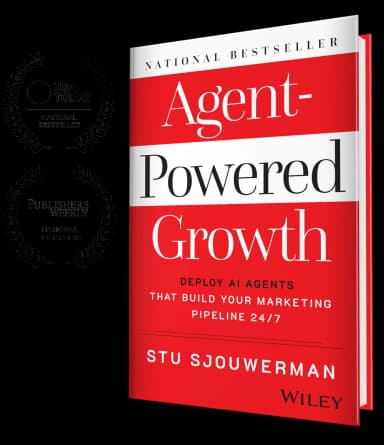
Stu founded KnowBe4 in 2010 and grew it into the world's largest security-awareness training platform before taking it public on the NASDAQ in 2021 and its subsequent acquisition by Vista Equity Partners in 2023. He co-founded ReadingMinds with Marcio Castilho and Alin Irimie, the same leadership team that built KnowBe4. Author of the USA Today bestseller Agent-Powered Growth and a regular contributor to Forbes Tech Council and Greenbook on AI, agentic marketing, and customer intelligence.
Know what your customers feel. Not just what they say.
ReadingMinds conducts AI voice interviews that classify emotion type and intensity. Try a 3-minute Live Test Drive with Emma.
Start 3‑Minute Live Test Drive