Survey Fraud Is Now a Business Risk, Not Just a Research Problem
The customer insight industry has spent years making research faster. Online panels made recruitment easier. Automation made surveys cheaper. AI can now write questions, interview respondents, and summarize findings in hours.
But speed is worthless when the people behind the answers are not who they claim to be.
A recent NORC article warns that fraud in nonprobability surveys is no longer an occasional data-quality problem. It is structural. Citing a January 2026 Insights Association presentation, NORC reports an estimate that 40 percent of nonprobability interviews conducted in 2025 may have been fraudulent, equal to roughly two billion interviews. Most of that fraud is still attributed to human click farms, while AI-driven fraud is only beginning to develop.
The most dangerous point is not simply that fraud adds noise. Fraud behaves like bias. Fake or low-quality respondents often cluster around repeated demographics, improbable claims, inconsistent language, and suspicious completion patterns. That can distort segment comparisons, trend lines, and conclusions about hard-to-reach groups. A polished dashboard can therefore turn corrupted input into a highly confident business recommendation.
This changes what companies should demand from modern research platforms.
It is no longer enough to ask, "Can the system collect answers?" Leaders must ask:
- Was the respondent eligible?
- Do we know where the respondent came from?
- Is there evidence that one real person completed the interview?
- Are the answers internally consistent?
- Can every conclusion be traced back to sourced evidence?
These are the same tests behind the Customer Evidence Trust Checklist.
NORC argues that the strongest defense begins before data collection, through controlled recruitment and verified identity, rather than relying entirely on downstream cleaning. That is an important distinction. Fraud detection helps, but filtering bad data after it enters a study cannot fully repair a weak sample foundation.
At ReadingMinds, we believe AI-led research must include an evidence-integrity layer. Voice conversation can add friction, reveal inconsistencies, and create richer evidence than a simple form, but voice alone is not proof of identity. Trust requires multiple signals: verified sourcing, eligibility checks, respondent-authenticity controls, consistency testing, transparent exclusions, and conclusions linked to actual customer quotes. You can review how we govern sourcing and provenance at our Trust & Compliance Center.
AI is making research dramatically easier to produce. It must also make research harder to fake.
The winners will not be the platforms that generate the most interviews. They will be the platforms that deliver evidence executives can safely act on.
That is the standard required today when customer research shapes products, messaging, investments, and decisions made by increasingly autonomous AI agents.
About the author

Stu Sjouwerman
CEO and Co-Founder, ReadingMinds.AI
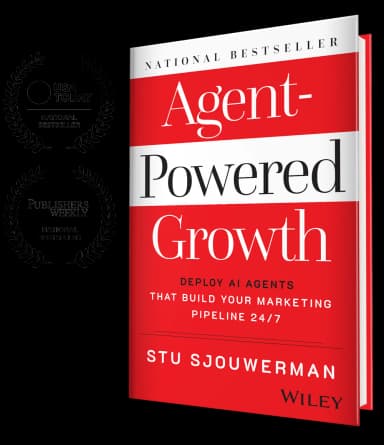
Stu founded KnowBe4 in 2010 and grew it into the world's largest security-awareness training platform before taking it public on the NASDAQ in 2021 and its subsequent acquisition by Vista Equity Partners in 2023. He co-founded ReadingMinds with Marcio Castilho and Alin Irimie, the same leadership team that built KnowBe4. Author of the USA Today bestseller Agent-Powered Growth and a regular contributor to Forbes Tech Council and Greenbook on AI, agentic marketing, and customer intelligence.
Know what your customers feel. Not just what they say.
ReadingMinds conducts AI voice interviews that classify emotion type and intensity. Try a 3-minute Live Test Drive with Emma.
Start 3‑Minute Live Test Drive