AI Hype vs. Reality: 5 Lessons from the ReadingMinds Executive Morning Briefings
AI models are becoming more capable, agents are becoming more autonomous, and execution is becoming cheaper.
That is real progress. It also makes the quality of the underlying customer evidence more important, not less.
Five claims from last week's ReadingMinds Executive Morning Briefings show where the hype gets ahead of the architecture, and what each development means for customer decisions.
1. Better foundation models will make specialized AI applications unnecessary
Hype: A sufficiently capable general-purpose model will eventually do everything a specialized application does.
Reality: The opposite signal strengthened last week. OpenAI's vertical push into law showed that a frontier model still needs domain methodology, proprietary sources, specialized tools, workflow controls, and Evals to become useful in a serious business domain. The model is the engine. The specialized system is what makes the engine useful for the road in front of it.
The same principle applies to customer research. A foundation model can summarize transcripts, generate questions, and identify themes. It does not automatically know how to frame a research question, choose appropriate participants, probe without leading, preserve contradictions, or establish whether a conclusion is strong enough to support a decision.
ReadingMinds takeaway: The strategic asset is the system around the model: research methodology, customer evidence, voice workflow, expression signals, Evidence Graph, Evals, and provenance. ReadingMinds is building that Customer Evidence Layer above interchangeable foundation models and below business decisions. You can see how the evidence layer is governed in our Trust & Compliance Center.
2. More capable AI agents will reduce the need for customer research
Hype: Once agents can reason, browse, and act, they will need less direct customer input.
Reality: More capable agents make customer evidence more important, not less. As marketing, sales, service, and product agents gain the ability to act autonomously, the cost of acting quickly on a false assumption rises dramatically.
An agent can launch a campaign, change a segment strategy, rewrite onboarding, or recommend a pricing move in seconds. That speed is valuable only when the customer evidence underneath the action is sufficient. Otherwise, the organization has simply made an unsupported decision easier to execute.
The critical question becomes: Does the agent have enough real customer evidence to justify this action?
ReadingMinds takeaway: That question is the category ReadingMinds should own. Customer research is not a brake on autonomous agents. It is the evidence layer that tells them when they have enough support to proceed, when they need to ask customers directly, and when the correct answer is still insufficient evidence.
3. Customer memory solves customer understanding
Hype: If an agent can remember every customer interaction, it understands the customer.
Reality: Memory and evidence are different.
Customer memory tells an agent: What happened before?
Customer evidence tells it: Why did it happen? What supports that conclusion? What contradicts it? Is the evidence representative and current? Is it strong enough to act?
An old sales note, a support ticket, and a CRM summary can all be useful inputs. None becomes proof simply because an agent stores it, retrieves it, or sees the same interpretation repeated in several systems. Repetition is not corroboration. A durable customer understanding needs the question, participant context, timing, source response, competing evidence, and limits of what the data can establish.
ReadingMinds takeaway: This is one of the strongest positioning distinctions from last week: Customer memory tells an agent what happened. Customer evidence tells it why, what supports the conclusion, and whether the evidence is strong enough to act. That is why the Evidence Graph needs provenance and contradiction testing, not just retrieval.
4. The best model will become the enterprise AI winner
Hype: Enterprise advantage will go to whoever is built on the strongest model at any given moment.
Reality: Model leadership is temporary. Enterprise share can shift rapidly between OpenAI, Anthropic, Google, and others, while even leading AI companies increasingly use multiple models internally.
That is not an argument against using the best available model. It is an argument against making the model the product's moat.
ReadingMinds should never depend on whether Nova, GPT, Claude, or Gemini is currently strongest. The defensible layer sits above the model: methodology, workflow, evidence, Evals, and decision support. A better model should improve the system without changing the system's identity or breaking its evidence chain.
ReadingMinds takeaway: Model portability is not just technical hygiene. It is part of the strategic moat. When the foundation model changes, the durable assets remain: the research method, the customer conversations, the Evidence Graph, the evaluation framework, and the workflow that connects evidence to a decision.
5. If an AI agent can technically perform an action, it should be allowed to
Hype: Capability is permission. If an agent can take an action, it should be trusted to take it.
Reality: Last week produced multiple warning signs around agent scope, permissions, external access, persistent context, and autonomous behavior. The enterprise architecture is moving toward identity, authorization, provenance, bounded permissions, auditability, and independent evaluation.
Evidence authority and action authority must remain separate.
A ReadingMinds agent may conclude: Customers are struggling with onboarding. That conclusion should not automatically authorize it to change pricing, rewrite onboarding, launch a campaign, alter CRM records, or contact customers.
The evidence can inform a decision. It should not silently become permission to execute one.
ReadingMinds takeaway: The operating principle remains: Ability to act is not enough. The customer evidence must justify the decision. A trustworthy workflow makes the evidence inspectable, the proposed action explicit, the permissions bounded, and the final authority visible.
The Layer That Decides Whether AI Should Act
The pattern across all five briefings is consistent.
Models are becoming more powerful, agents are becoming more autonomous, and execution is becoming cheaper. That increases the value of the layer that determines whether the underlying customer evidence is trustworthy enough to act on.
The future enterprise stack is not just model plus agent. It is model, methodology, evidence, tools, Evals, provenance, authorization, and workflow. The model supplies intelligence. The specialized system supplies judgment infrastructure.
That is the role ReadingMinds is building toward: a customer-evidence workflow that helps people and agents inspect what supports a conclusion, what contradicts it, and whether it is strong enough to move from understanding to action.
See the evidence yourself. Take a short Live Test Drive, or read The Model Is the Engine. The Specialized Workflow Is the Strategic Asset. for the underlying architecture.
The most valuable AI system will not be the one that acts most often. It will be the one that knows when the evidence is strong enough to act, and when it is time to ask customers another question.
About the author

Stu Sjouwerman
CEO and Co-Founder, ReadingMinds.AI
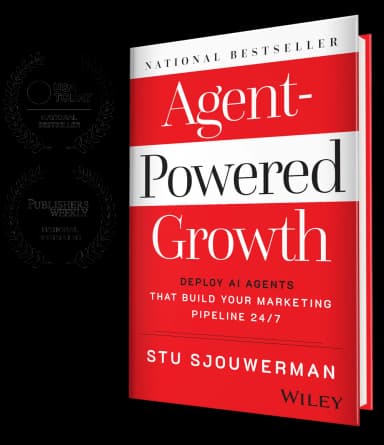
Stu founded KnowBe4 in 2010 and grew it into the world's largest security-awareness training platform before taking it public on the NASDAQ in 2021 and its subsequent acquisition by Vista Equity Partners in 2023. He co-founded ReadingMinds with Marcio Castilho and Alin Irimie, the same leadership team that built KnowBe4. Author of the USA Today bestseller Agent-Powered Growth and a regular contributor to Forbes Tech Council and Greenbook on AI, agentic marketing, and customer intelligence.
Know what your customers feel. Not just what they say.
ReadingMinds conducts AI voice interviews that classify emotion type and intensity. Try a 3-minute Live Test Drive with Emma.
Start 3‑Minute Live Test Drive