The Soft No: Tracking Hesitation as Subtext
The "soft no" rarely arrives as a clear rejection. It shows up first as hesitation.
Someone pauses a little longer before answering. They add a few extra "uhs" or "wells." Their response becomes slower, more careful, more hedged. The words may still sound positive, but the signal underneath often isn't.
In real conversations, hesitation is one of the earliest indicators that someone is leaning toward a negative decision.
Think about a simple business example. You ask a customer, "Would this solve the problem for your team?" If the answer comes back instantly ("Yes, absolutely") the path is clear. But if the response begins with a pause followed by, "Well... it might be a little tricky for us right now," the emotional direction of the conversation has already shifted. The actual "no" may come a few sentences later, but the signal appeared seconds earlier.
Dispreferred Responses: The Linguistics of Hesitation
Humans instinctively soften negative responses. We delay, hedge, or add filler words to reduce social friction. Linguists call these dispreferred responses: answers that people know might disappoint the other person. The hesitation buys time and cushions the message.
That makes hesitation extremely valuable data.
Patterns at Scale
When you analyze real conversations at scale, patterns emerge. Longer response latency. Clusters of fillers like "um," "well," or "so." Hedges such as "maybe," "kind of," or "not sure." Each by itself may seem harmless. Together they form a reliable early-warning signal.
For companies trying to understand customers, this matters enormously.
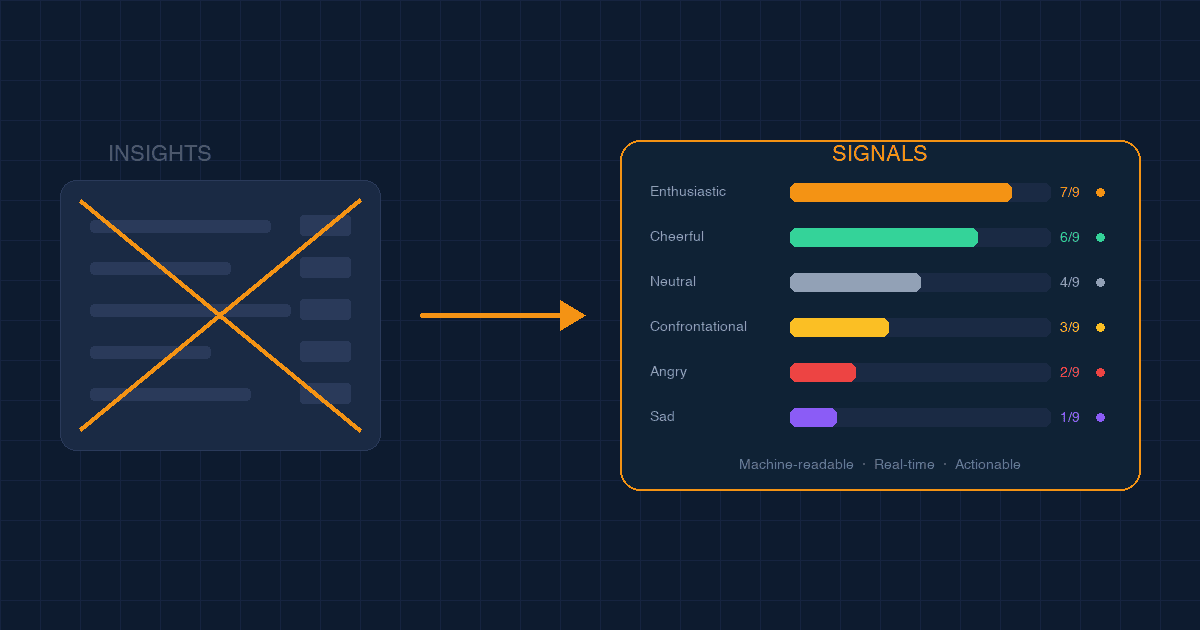
Most feedback systems capture only what customers say. But the most important information often lives in how they say it. The pause before the answer. The uncertainty in the tone. The subtle friction in the delivery.
Those signals reveal doubts, risks, and potential churn long before a customer explicitly says no.
In other words, hesitation is not noise in the conversation.
It is the first draft of the truth.
Learn how ReadingMinds detects these signals: ReadingMinds Expression Fingerprint or see a real report.
About the author
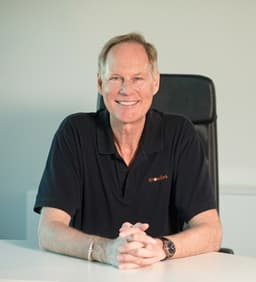
Stu Sjouwerman
CEO and Co-Founder, ReadingMinds.AI
Stu founded KnowBe4 in 2010 and grew it into the world's largest security-awareness training platform before taking it public on the NASDAQ in 2021 and its subsequent acquisition by Vista Equity Partners in 2023. He co-founded ReadingMinds with Marcio Castilho and Alin Irimie, the same leadership team that built KnowBe4. Author of the USA Today bestseller Agent-Powered Growth and a regular contributor to Forbes Tech Council and Greenbook on AI, agentic marketing, and customer intelligence.
Know what your customers feel. Not just what they say.
ReadingMinds conducts AI voice interviews that classify emotion type and intensity. Try a 3-minute Live Test Drive with Emma.
Start 3‑Minute Live Test Drive