Verified Humans Are Necessary. Verified Evidence Is the Next Layer.
Something important is happening as AI gets better.
Real humans are becoming more valuable, not less.
The research industry is responding with larger participant networks, stronger identity verification, fraud detection, and better ways for AI agents to reach real people.
That is necessary. But verifying the human solves only the first problem.
It answers:
“Is there actually a real person on the other end?”
It does not answer:
“Should I trust what the AI learned from that person?”
That requires another layer.
From Verified Humans to Verified Evidence
Imagine an AI agent needs to understand why enterprise customers are churning. It recruits 25 verified customers. That is a strong start. It is not yet evidence that can safely support a consequential decision.
We still need to ask:
- Were they the right customers for the question?
- Were the questions methodologically sound?
- Did the interviewer probe vague answers?
- Did it accidentally lead the respondent?
- Did the analysis faithfully represent what customers said?
- What evidence contradicts the dominant conclusion?
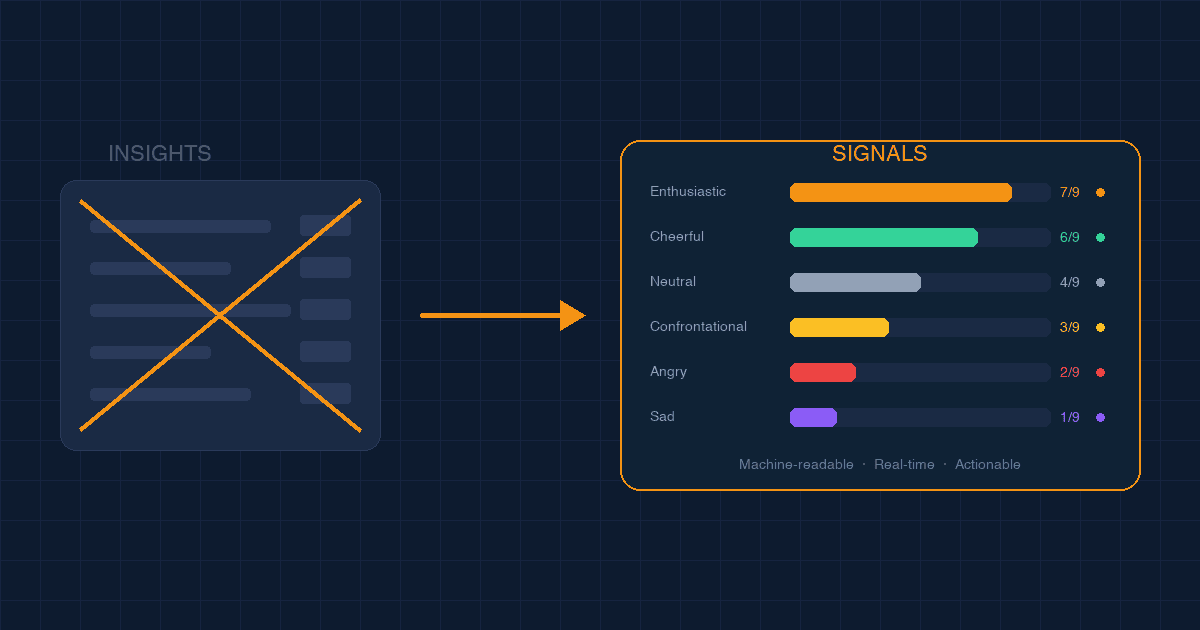
- How was each response expressed?
- Can every conclusion be traced back to its source?
- Is the evidence strong enough to justify action?
A verified participant does not automatically produce verified evidence. Participant checks address who took part. Evidence quality also depends on study design, interview conduct, analysis fidelity, context, and provenance.
The Next Layer
This is where ReadingMinds fits.
ReadingMinds is not trying to build the world's largest participant network. Participant networks answer:
Who should we talk to?
ReadingMinds is building the Customer Evidence Layer to answer the questions that come next:
What should we ask?
What did we learn from the responses?
How strong is the evidence?
What contradicts it?
And is it sufficient to act?
That requires research methodology, adaptive voice interviewing, grounded transcripts, expression signals, provenance, Representation Fidelity, Research Evals, and the Evidence Graph. These are connected checks, not a single verification badge. Expression analysis describes how a response is expressed in the conversation, not a person's private state. See how the evidence workflow is governed in our Trust & Compliance Center.
The output should not simply be another AI-generated insight. The aim is an Evidence Verdict that another human or AI agent can inspect before making a consequential decision: what supports the finding, what challenges it, where it came from, and whether the available evidence is sufficient for the proposed action.
The Scarcity Is Moving Up the Stack
As AI reasoning gets cheaper, verified humans become more valuable. As verified humans become easier to reach, the next scarcity emerges:
Verified customer understanding.
The future stack therefore looks like:
AI Intelligence → Verified Human → Verified Evidence → Decision → Action
Each layer matters. And as autonomous agents gain the power to change pricing, campaigns, onboarding, sales motions, and product decisions, the evidence layer becomes critical. The faster an agent can act, the more important it is to know what supports its conclusion and what remains uncertain.
Verified humans are necessary.
Verified evidence is the next layer.
Learn more about why customer evidence is the missing layer in the AI agent economy, or see how an adaptive customer conversation works in a short Live Test Drive.
About the author
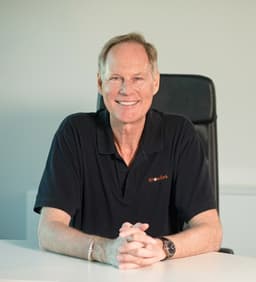
Stu Sjouwerman
CEO and Co-Founder, ReadingMinds.AI
Stu founded KnowBe4 in 2010 and grew it into the world's largest security-awareness training platform before taking it public on the NASDAQ in 2021 and its subsequent acquisition by Vista Equity Partners in 2023. He co-founded ReadingMinds with Marcio Castilho and Alin Irimie, the same leadership team that built KnowBe4. Author of the USA Today bestseller Agent-Powered Growth and a regular contributor to Forbes Tech Council and Greenbook on AI, agentic marketing, and customer intelligence.
Know what your customers feel. Not just what they say.
ReadingMinds conducts AI voice interviews that classify emotion type and intensity. Try a 3-minute Live Test Drive with Emma.
Start 3‑Minute Live Test Drive