Synthetic Audiences Generate Hypotheses. Verified Customers Generate Evidence.
AI can simulate buyer personas, test messaging, predict objections, and model how different customer segments might respond.
That is useful.
But it is not the same as evidence.
What Synthetic Audiences Are Good For
Synthetic audiences are best for asking:
- What might customers think?
- Which objections are plausible?
- Which messages should we test?
- What hypotheses deserve investigation?
That can save enormous time. A team can explore a wide range of ideas before spending money on fieldwork, recruiting, or a campaign launch. Synthetic research can expose assumptions, identify questions worth asking, and help a team decide where real customer research will have the highest value.
The output is useful, but its status matters. It is a hypothesis, not a customer observation.
When Hypotheses Are Not Enough
When a company is about to change pricing, reposition a product, launch a campaign, or alter its roadmap, the standard should be higher.
The question is no longer:
What might customers say?
It becomes:
What did real customers actually say?
That requires verified human evidence.
If an AI simulates 1,000 buyers and predicts that new pricing will work, you have a hypothesis. The number of simulated responses does not turn a model's output into 1,000 independent customer observations.
If verified customers explain why the pricing works or fails, and those responses are tied to transcripts, study context, expression signals, and provenance, you have evidence. The evidence still needs to be evaluated carefully, but a decision-maker can inspect where it came from, what it supports, and what it does not establish. Our Trust & Compliance Center documents the safeguards around that evidence layer.
The Future Uses Both
The future of research will use synthetic and human methods together.
Synthetic audiences can generate ideas, pressure-test assumptions, and determine which questions are worth asking. They are especially valuable in the divergent part of the workflow, where teams want to explore broadly and eliminate weak ideas quickly.
Real customers should validate the conclusions that matter. They provide the grounded responses, unexpected objections, segment differences, and contextual detail that a simulation cannot create by itself.
The disciplined workflow is simple:
- Use synthetic audiences to generate and prioritize hypotheses.
- Take the strongest or highest-stakes hypotheses to verified customers.
- Tie the responses to the questions, study context, transcripts, expression signals, and provenance.
- Preserve contradictions instead of averaging them away.
- Treat the result as evidence only after it has passed the appropriate evaluation for the decision.
The distinction is not synthetic versus human. It is hypothesis versus evidence.
Evidence Matters More When Agents Act
This distinction becomes even more important as AI agents gain the ability to act autonomously.
The faster an agent can change messaging, pricing, campaigns, or product decisions, the more important it becomes to know whether the underlying conclusion came from simulation or reality.
An agent may use synthetic research to explore possible positioning angles. That is a reasonable use of a hypothesis. But before it changes a live campaign or recommends a pricing decision, it should be able to show whether real customers were asked, what they said, which responses support the conclusion, and which responses challenge it.
The agent should also know when the evidence is insufficient. A polished synthetic consensus is not a substitute for customer validation, especially when the action is expensive, difficult to reverse, or likely to affect many customers.
The ReadingMinds Standard
ReadingMinds is building the workflow that connects business questions to verified customer conversations and decision-ready evidence. That includes research methodology, voice interviews, adaptive probing, grounded transcripts, expression signals, Evidence Graph, Evals, and provenance.
The point is not to reject simulation. It is to keep simulation in its proper role and make the status of every conclusion visible.
Synthetic audiences generate hypotheses. Verified customers generate evidence.
Before an agent makes an important business decision, evidence should win.
See the difference yourself. Take a short Live Test Drive, or read Synthetic Audiences Are the Compass. Real People Are the Anchor. for the broader hybrid-research framework.
About the author
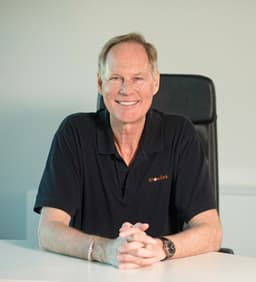
Stu Sjouwerman
CEO and Co-Founder, ReadingMinds.AI
Stu founded KnowBe4 in 2010 and grew it into the world's largest security-awareness training platform before taking it public on the NASDAQ in 2021 and its subsequent acquisition by Vista Equity Partners in 2023. He co-founded ReadingMinds with Marcio Castilho and Alin Irimie, the same leadership team that built KnowBe4. Author of the USA Today bestseller Agent-Powered Growth and a regular contributor to Forbes Tech Council and Greenbook on AI, agentic marketing, and customer intelligence.
Know what your customers feel. Not just what they say.
ReadingMinds conducts AI voice interviews that classify emotion type and intensity. Try a 3-minute Live Test Drive with Emma.
Start 3‑Minute Live Test Drive